
STRIDE-ED: A Strategy-Grounded Stepwise Reasoning Framework for Empathetic Dialogue Systems
arXiv cs.CL / 4/9/2026
💬 OpinionSignals & Early TrendsIdeas & Deep AnalysisModels & Research
Key Points
- The paper introduces STRIDE-ED, a strategy-grounded, interpretable, stepwise reasoning framework designed to improve empathetic dialogue by making response generation decisions conditioned on explicit strategies and context.
- It proposes a strategy-aware data refinement pipeline that uses LLM-based annotation, consistency-weighted evaluation across multiple models, and dynamic sampling to build higher-quality training data aligned to empathetic strategies.
- STRIDE-ED is trained via a two-stage process combining supervised fine-tuning with multi-objective reinforcement learning to better align outputs with target emotions, empathetic strategies, and response formats.
- Experiments reportedly show STRIDE-ED generalizes across multiple open-source LLMs and outperforms prior methods on both automatic metrics and human evaluations.
- The work frames empathetic dialogue as a multi-stage cognitive/decision-making problem rather than a single-step generation task, aiming to reduce limitations from missing comprehensive strategy frameworks and low-quality strategy-aware data.
Related Articles

Black Hat Asia
AI Business
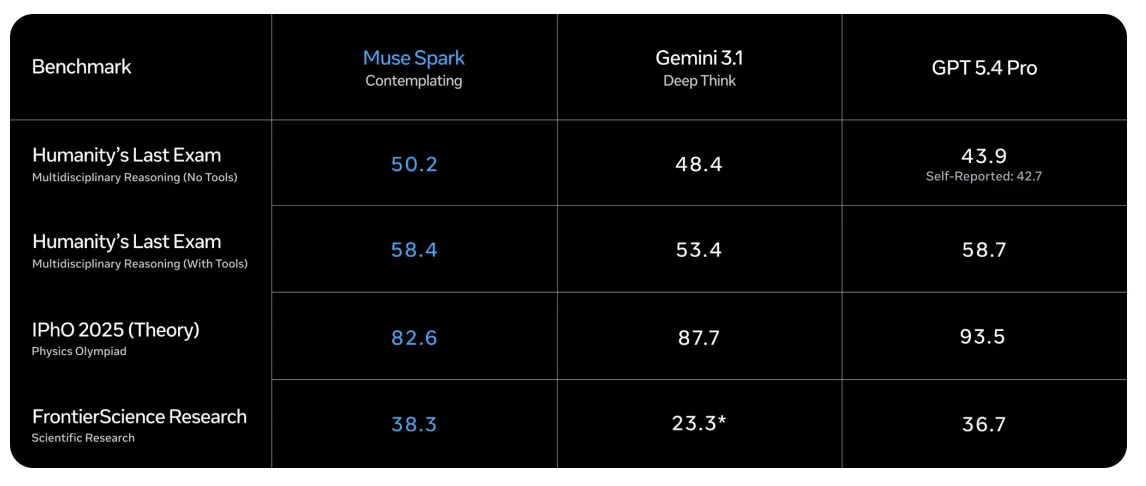
Meta Superintelligence Lab Releases Muse Spark: A Multimodal Reasoning Model With Thought Compression and Parallel Agents
MarkTechPost

Chatbots are great at manipulating people to buy stuff, Princeton boffins find
The Register
I tested and ranked every ai companion app I tried and here's my honest breakdown
Reddit r/artificial

Big Tech firms are accelerating AI investments and integration, while regulators and companies focus on safety and responsible adoption.
Dev.to


