
Causal Optimal Coupling for Gaussian Input-Output Distributional Data
arXiv cs.LG / 4/3/2026
💬 OpinionIdeas & Deep AnalysisModels & Research
Key Points
- The paper studies how to construct an optimal probabilistic coupling between input-output distributional data from a causal dynamical system while enforcing both matching marginals and a causality (temporal) constraint.
- It formulates the coupling search as a Schrödinger Bridge problem that finds the distribution closest to a prior in KL divergence under the required marginal and causality constraints.
- For Gaussian marginals with time-varying quadratic costs, the authors provide a fully tractable characterization of the Sinkhorn iterations and show how they converge to the optimal solution.
- The work is positioned as a theoretical foundation for applying causal optimal transport approaches to system identification when only distributional (not necessarily sample-aligned) data are available.
Related Articles

90000 Tech Workers Got Fired This Year and Everyone Is Blaming AI but Thats Not the Whole Story
Dev.to

Microsoft’s $10 Billion Japan Bet Shows the Next AI Battleground Is National Infrastructure
Dev.to
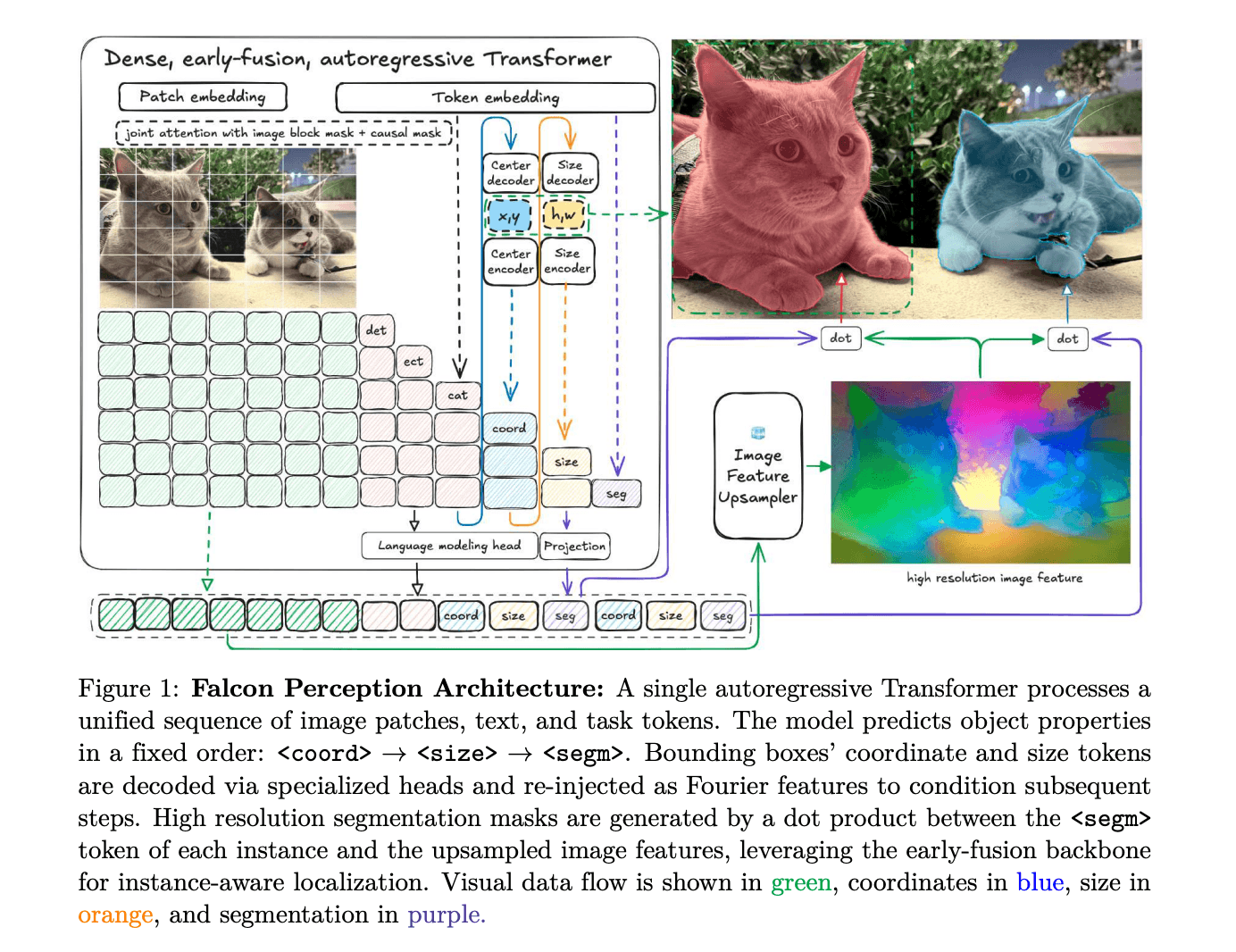
TII Releases Falcon Perception: A 0.6B-Parameter Early-Fusion Transformer for Open-Vocabulary Grounding and Segmentation from Natural Language Prompts
MarkTechPost

The house asked me a question
Dev.to

Precision Clip Selection: How AI Suggests Your In and Out Points
Dev.to


