
BVFLMSP : Bayesian Vertical Federated Learning for Multimodal Survival with Privacy
arXiv stat.ML / 4/3/2026
💬 OpinionIdeas & Deep AnalysisModels & Research
Key Points
- The paper introduces BVFLMSP, a Bayesian vertical federated learning framework for multimodal time-to-event (survival) prediction that avoids centralized training by keeping modality-specific data at separate clients.
- BVFLMSP uses a split neural network where each client trains a Bayesian neural network per modality and sends perturbed intermediate representations to a central server for survival risk prediction.
- Differential privacy is applied to client-side representations to provide formal privacy guarantees against information leakage during federated training.
- Experiments report improved discrimination versus both single-modality and centralized multimodal baselines (e.g., up to 0.02 higher C-index than MultiSurv) while also producing uncertainty estimates for more reliable decision-making.
- The study analyzes the performance–privacy tradeoff across different privacy budgets and modality combinations, showing robustness under stricter privacy constraints.
Related Articles

90000 Tech Workers Got Fired This Year and Everyone Is Blaming AI but Thats Not the Whole Story
Dev.to

Microsoft’s $10 Billion Japan Bet Shows the Next AI Battleground Is National Infrastructure
Dev.to
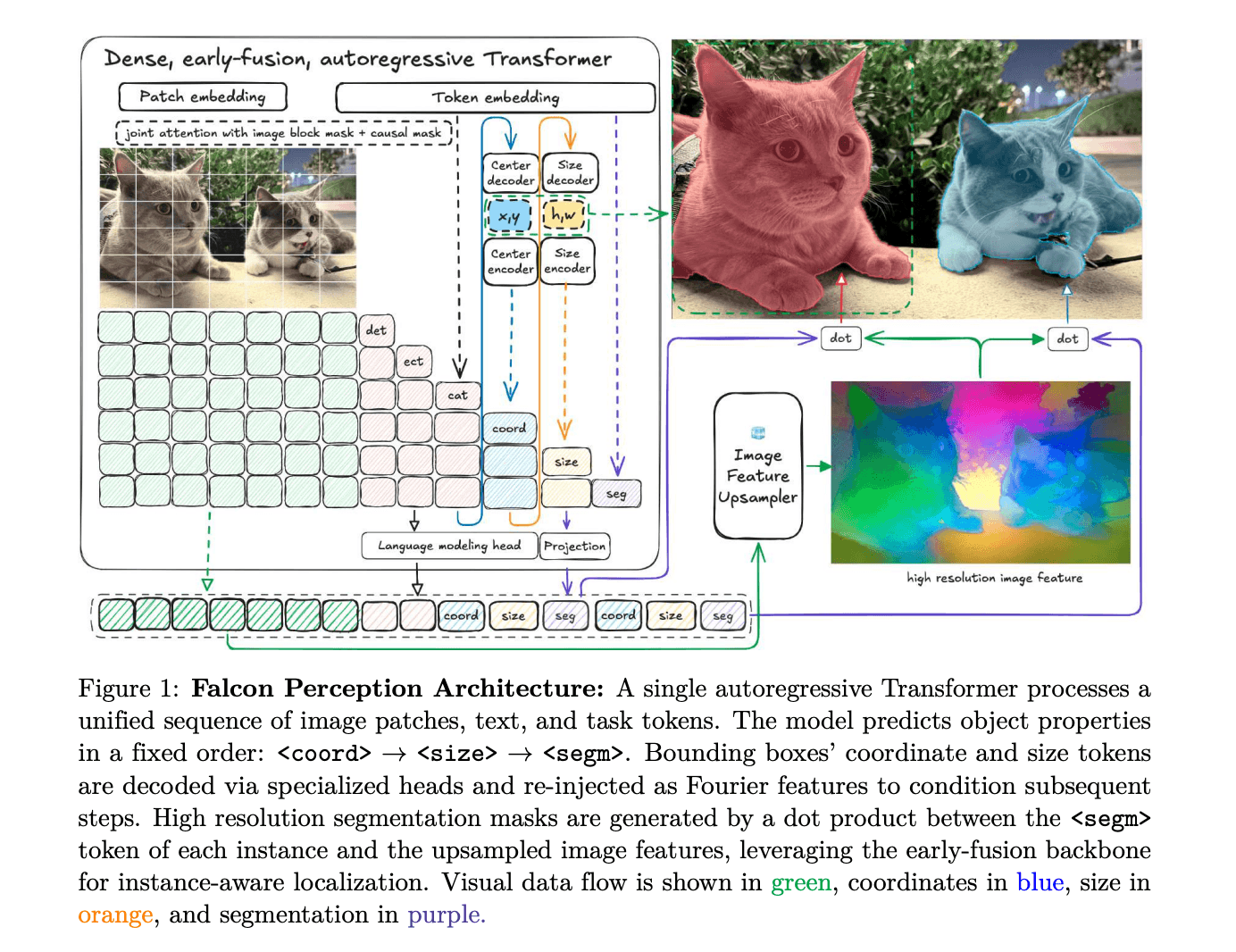
TII Releases Falcon Perception: A 0.6B-Parameter Early-Fusion Transformer for Open-Vocabulary Grounding and Segmentation from Natural Language Prompts
MarkTechPost

The house asked me a question
Dev.to

Precision Clip Selection: How AI Suggests Your In and Out Points
Dev.to


