
DenseScout: Algorithm-System Co-design for Budgeted Tiny Object Selection on Edge Platforms
arXiv cs.CV / 4/29/2026
📰 NewsDeveloper Stack & InfrastructureModels & Research
Key Points
- The paper addresses the challenge of tiny object perception on edge devices, where systems must meet both tight compute budgets and end-to-end latency deadlines.
- It argues that detector-style frontends are poorly matched to budgeted patch selection because high offline detection accuracy does not reliably translate to effective low-budget prioritization once transport and inference delays are included.
- DenseScout is introduced as a lightweight, dense-response selector (1.01M parameters) that directly ranks candidate patch locations using a lightweight proxy input from a high-resolution scene.
- To make offline quality usable in deployment, the authors build a transport-aware runtime for heterogeneous edge platforms and evaluate with QoS-constrained recall under deadline constraints.
- Experiments show DenseScout outperforms detector-based patch-selection baselines in low-budget settings, and cross-platform results on RK3588 and Jetson Orin NX highlight that real performance depends jointly on selector quality and runtime efficiency.
Related Articles
LLMs will be a commodity
Reddit r/artificial

What it feels like to have to have Qwen 3.6 or Gemma 4 running locally
Reddit r/LocalLLaMA
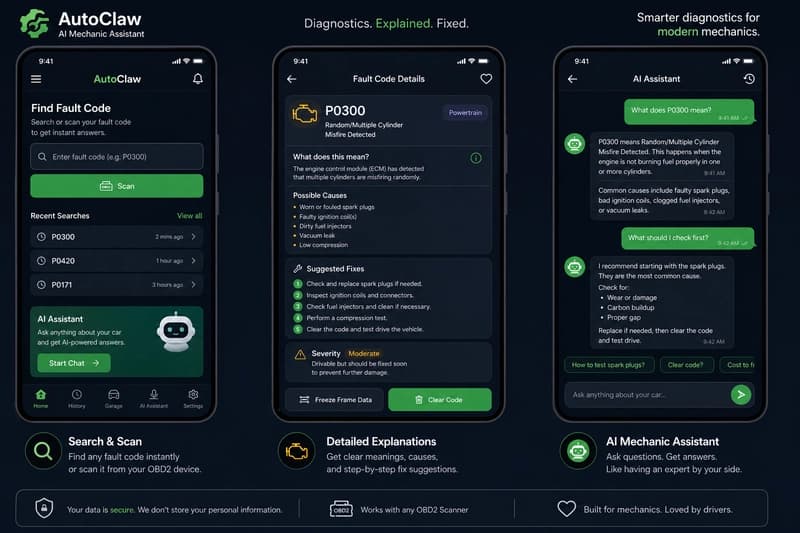
From Fault Codes to Smart Fixes: How Google Cloud NEXT ’26 Inspired My AI Mechanic Assistant
Dev.to

Dex lands $5.3M to grow its AI-driven talent matching platform
Tech.eu

7 OpenClaw Money-Making Cases in One Week — and the Hidden Cost Problem Behind Them
Dev.to


