
Learning to Play Blackjack: A Curriculum Learning Perspective
arXiv cs.AI / 4/2/2026
💬 OpinionSignals & Early TrendsIdeas & Deep AnalysisModels & Research
Key Points
- The paper introduces an LLM-guided curriculum framework for reinforcement learning that dynamically generates a staged training path over available actions.
- It applies the approach to Blackjack by progressively introducing actions to both a Tabular Q-Learning agent and a Deep Q-Network (DQN) agent.
- In an 8-deck simulation across 10 runs, the curriculum method improves the DQN agent’s average win rate from 43.97% to 47.41% and lowers bust rate from 32.9% to 28.0%.
- The LLM-generated curriculum also substantially accelerates the training workflow, with more than a 74% overall speedup and full training finishing faster than the baseline’s evaluation phase.
- The results support the claim that LLM-guided curricula can make RL agents more effective, robust, and sample-/time-efficient.
Related Articles

Black Hat Asia
AI Business
v5.5.0
Transformers(HuggingFace)Releases
Bonsai (PrismML's 1 bit version of Qwen3 8B 4B 1.7B) was not an aprils fools joke
Reddit r/LocalLLaMA

Big Tech firms are accelerating AI investments and integration, while regulators and companies focus on safety and responsible adoption.
Dev.to
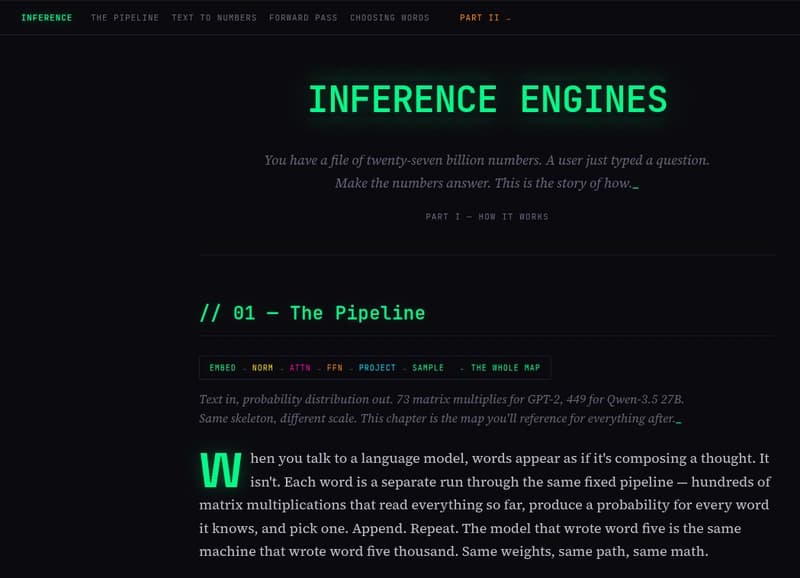
Inference Engines - A visual deep dive into the layers of an LLM
Dev.to


