
DP-CDA: An Algorithm for Enhanced Privacy Preservation in Dataset Synthesis Through Randomized Mixing
arXiv stat.ML / 4/30/2026
💬 OpinionIdeas & Deep AnalysisModels & Research
Key Points
- The paper proposes DP-CDA, a data publishing algorithm that generates synthetic datasets by randomly mixing privacy-sensitive data in a class-specific way to reduce re-identification risks.
- It introduces tuned randomness and provides formal privacy guarantees, with privacy accounting showing DP-CDA offers stronger protection than existing approaches.
- The authors evaluate utility by training predictive models on the synthetic data and show that DP-CDA can deliver better accuracy under the same privacy constraints.
- They also identify an optimal mixing order that improves the privacy–utility trade-off, particularly important for high-dimensional data where prior methods struggle.
- Overall, DP-CDA aims to maintain strict privacy while improving practical usefulness of synthetic data for downstream machine learning tasks.
Related Articles

Can AI Predict Pollution Before It Happens? The Smart Solution to an Old Problem
Dev.to
THE FIFTH TRANSMISSION: THE GRADIENT IS THE GOVERNMENT
Reddit r/artificial
Looking for feedback on OpenVidya: an open-source AI classroom layer for NCERT/CBSE [R]
Reddit r/MachineLearning
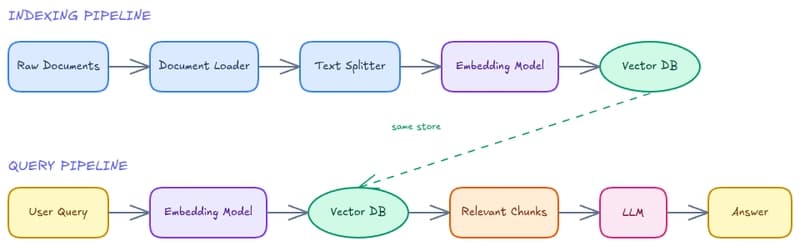
RAG Series (1): Why LLMs Need External Memory
Dev.to

One Open Source Project a Day (No. 54): Warp - The AI-Native Rust Terminal
Dev.to


