
DDCL-INCRT: A Self-Organising Transformer with Hierarchical Prototype Structure (Theoretical Foundations)
arXiv cs.LG / 4/3/2026
💬 OpinionIdeas & Deep AnalysisModels & Research
Key Points
- The paper argues that standard transformer practitioners must pre-select architecture size (e.g., number of attention heads, depth, width), often leading to systematically oversized models that can be pruned after training without losing performance.
- It proposes DDCL-INCRT, a self-organising transformer that learns its own structure during training by combining DDCL (prototype-based deep dual competitive learning for feedforward blocks) with INCRT (incremental head growth).
- DDCL uses a dictionary of learned prototype vectors that automatically spread according to the training objective, while INCRT starts with one attention head and adds new heads only when uncovered directional information surpasses a threshold.
- Theoretical results show that the prototype separation and incremental head addition reinforce one another, producing a hierarchy of heads by representational granularity and yielding a proved unique, minimal architecture sufficient for the task under stated assumptions.
- The authors provide formal guarantees for stability, convergence, and pruning safety, aiming to replace manual architecture design with a derivation-from-training approach.
Related Articles

90000 Tech Workers Got Fired This Year and Everyone Is Blaming AI but Thats Not the Whole Story
Dev.to

Microsoft’s $10 Billion Japan Bet Shows the Next AI Battleground Is National Infrastructure
Dev.to
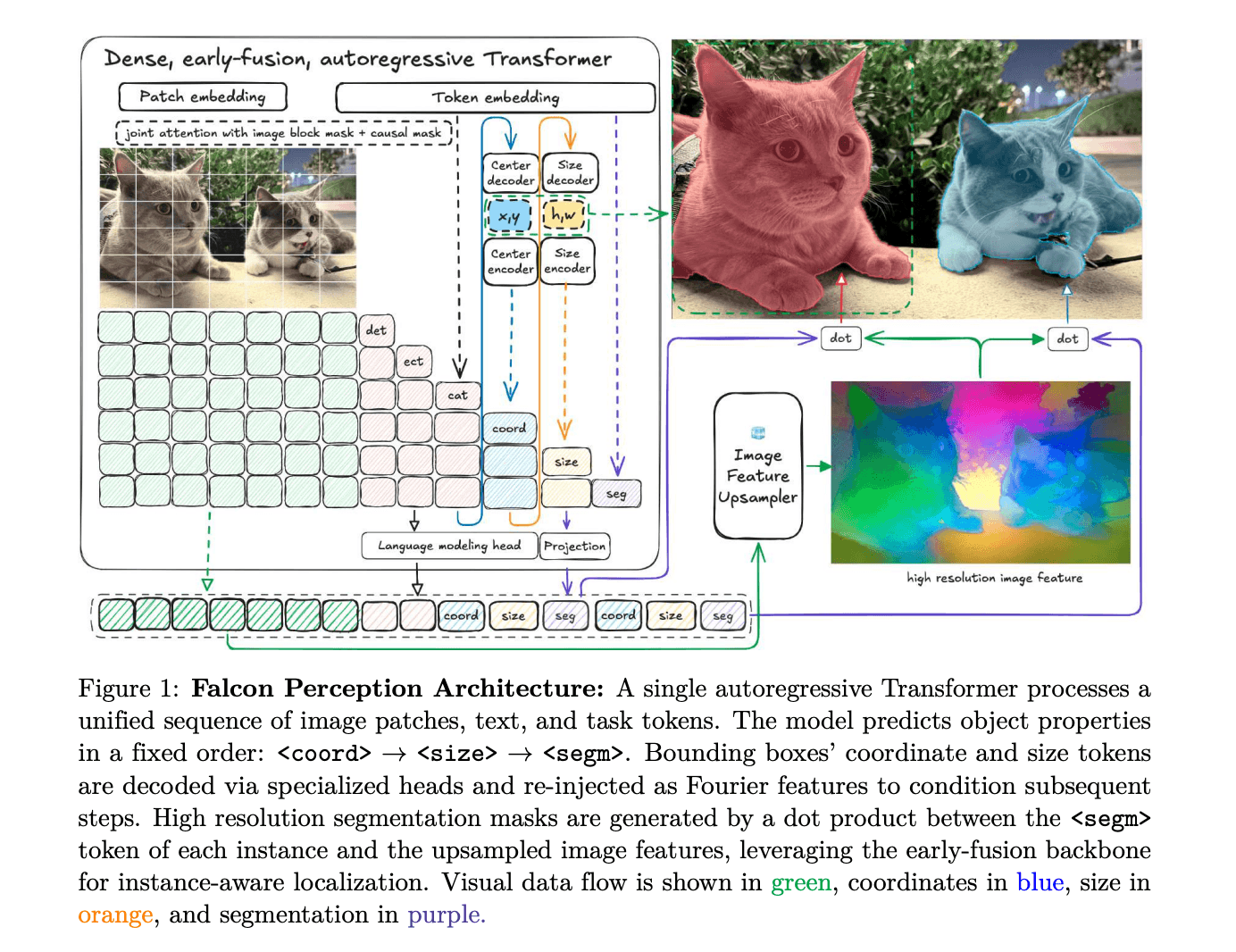
TII Releases Falcon Perception: A 0.6B-Parameter Early-Fusion Transformer for Open-Vocabulary Grounding and Segmentation from Natural Language Prompts
MarkTechPost

The house asked me a question
Dev.to

Precision Clip Selection: How AI Suggests Your In and Out Points
Dev.to


