
Back to Source: Open-Set Continual Test-Time Adaptation via Domain Compensation
arXiv cs.CV / 4/24/2026
📰 NewsIdeas & Deep AnalysisModels & Research
Key Points
- The paper introduces Open-set Continual Test-Time Adaptation (OCTTA), a realistic setting where domain shifts occur continuously during inference while unknown semantic classes can also appear.
- It argues that coupling between domain shift and semantic novelty can collapse the feature space, hurting both in-domain classification and out-of-distribution (OOD) detection.
- The authors propose DOmain COmpensation (DOCO), a lightweight framework that jointly performs domain adaptation and OOD detection using a closed-loop process.
- DOCO dynamically splits samples into likely in-distribution (ID) vs OOD, learns a domain-compensation prompt from ID samples by aligning feature statistics to the source domain, and uses a structural regularizer to prevent semantic distortion.
- The learned prompt is applied to OOD samples within the batch to better isolate semantic novelty, and experiments show DOCO sets a new state of the art over prior CTTA/OSTTA methods on multiple OCTTA benchmarks.
Related Articles
The 67th Attempt: When Your "Knowledge Management" System Becomes a Self-Fulfilling Prophecy of Excellence
Dev.to
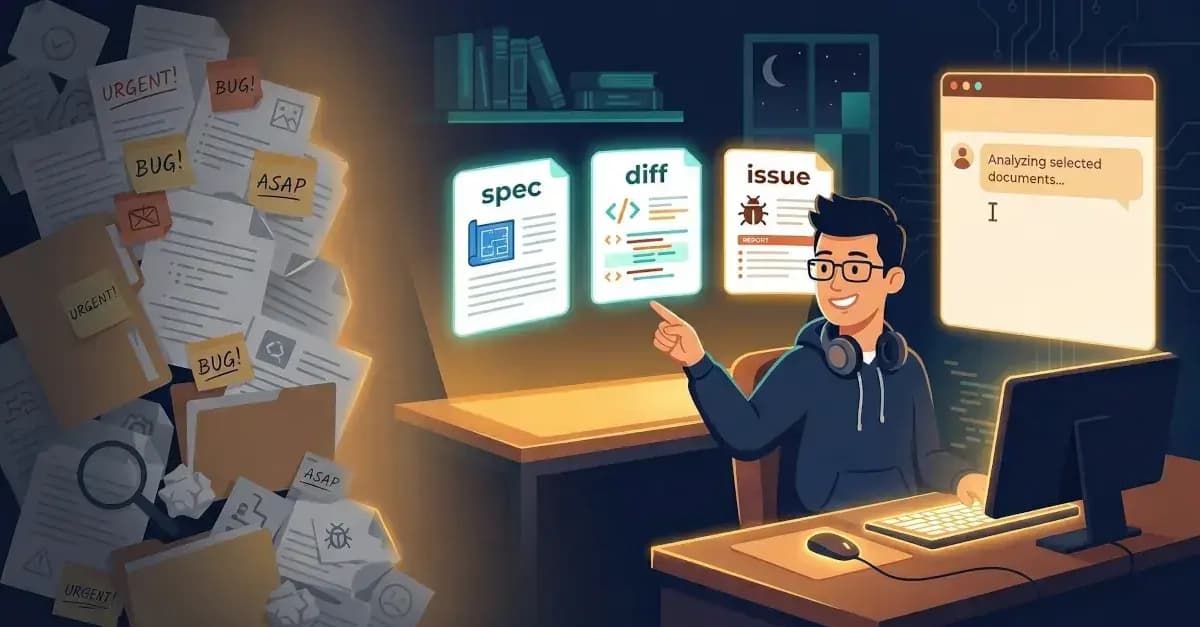
Context Engineering for Developers: A Practical Guide (2026)
Dev.to
GPT-5.5 is here. So is DeepSeek V4. And honestly, I am tired of version numbers.
Dev.to
I Built an AI Image Workflow with GPT Image 2.0 (+ Fixing Its Biggest Flaw)
Dev.to
Max-and-Omnis/Nemotron-3-Super-64B-A12B-Math-REAP-GGUF
Reddit r/LocalLLaMA


