
GSAR: Typed Grounding for Hallucination Detection and Recovery in Multi-Agent LLMs
arXiv cs.AI / 4/28/2026
📰 NewsIdeas & Deep AnalysisModels & Research
Key Points
- The paper introduces GSAR, a new grounding-evaluation and replanning framework for multi-agent LLM systems that generates structured diagnostic reports during incident investigation.
- GSAR improves hallucination handling by categorizing claims into grounded/ungrounded/contradicted/complementary and explicitly weighting evidence by its epistemic strength.
- It computes an asymmetric, contradiction-penalized weighted groundedness score and maps that score to tiered decisions (proceed, regenerate, replan) within a bounded-iteration outer loop under a fixed compute budget.
- The authors formalize the algorithm, prove six structural properties, and report consistent evaluation gains across five design claims using FEVER with gold Wikipedia evidence and four independently trained LLM judges.
- The paper includes comparisons against a Vectara groundedness-oriented baseline and claims GSAR is the first published framework to combine evidence-typed scoring with tiered recovery under explicit compute constraints.
Related Articles

Big Tech firms are accelerating AI investments and integration, while regulators and companies focus on safety and responsible adoption.
Dev.to
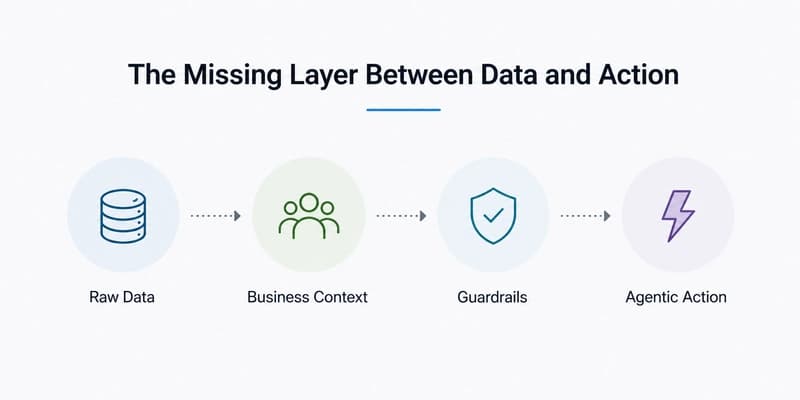
Everyone Wants AI Agents. Fewer Teams Are Ready for the Messy Business Context Behind Them
Dev.to
AI 编程工具对比 2026:Claude Code vs Cursor vs Gemini CLI vs Codex
Dev.to

How I Improved My YouTube Shorts and Podcast Audio Workflow with AI Tools
Dev.to

An improvement of the convergence proof of the ADAM-Optimizer
Dev.to


