
Multi-layer Cross-Attention is Provably Optimal for Multi-modal In-context Learning
arXiv stat.ML / 4/29/2026
💬 OpinionIdeas & Deep AnalysisModels & Research
Key Points
- The paper studies in-context learning in transformer-like models for multi-modal data, which has been less theoretically understood than the unimodal case.
- It introduces a mathematically tractable latent-factor framework to analyze when in-context learning can achieve Bayes-optimal performance.
- The authors prove a negative result: a single-layer, linear self-attention architecture cannot uniformly recover the Bayes-optimal predictor across the task distribution.
- To overcome this, they propose a linearized multi-layer cross-attention mechanism and analyze it in a large-depth and large-context-length regime.
- They further show that, under gradient-flow optimization, the proposed cross-attention mechanism is provably Bayes optimal, highlighting the value of depth and cross-attention for multi-modal learning.
Related Articles
LLMs will be a commodity
Reddit r/artificial
Indian Developers: How to Build AI Side Income with $0 Capital in 2026
Dev.to

What it feels like to have to have Qwen 3.6 or Gemma 4 running locally
Reddit r/LocalLLaMA

Dex lands $5.3M to grow its AI-driven talent matching platform
Tech.eu
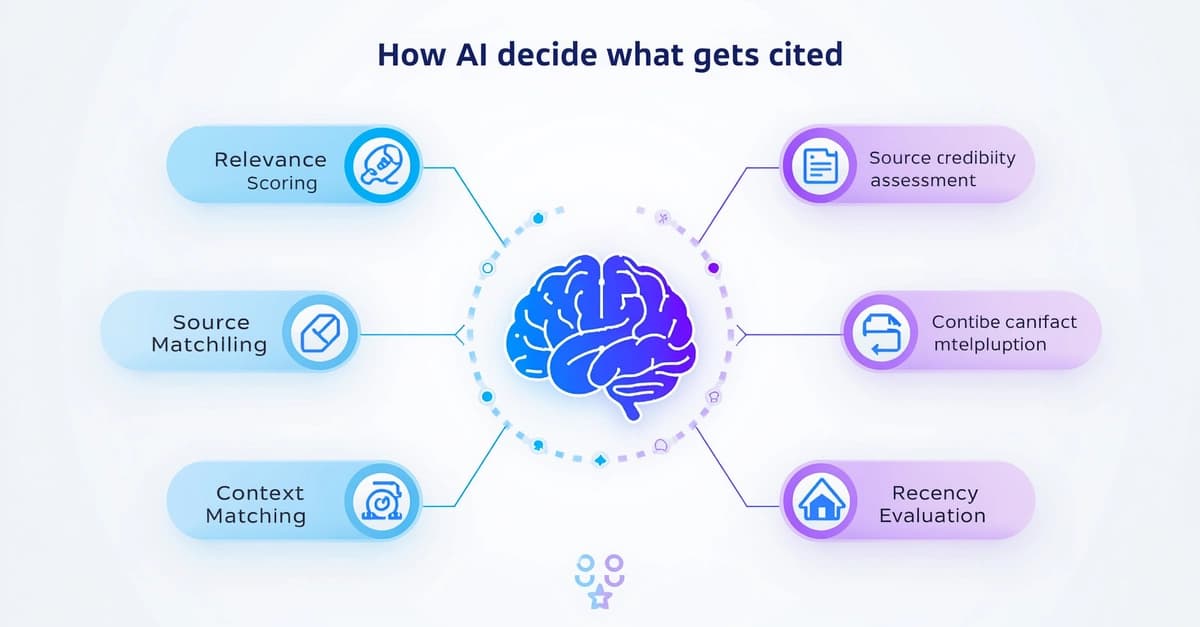
AI Citation Registry: Why Daily Updates Leave No Time for Data Structuring
Dev.to


