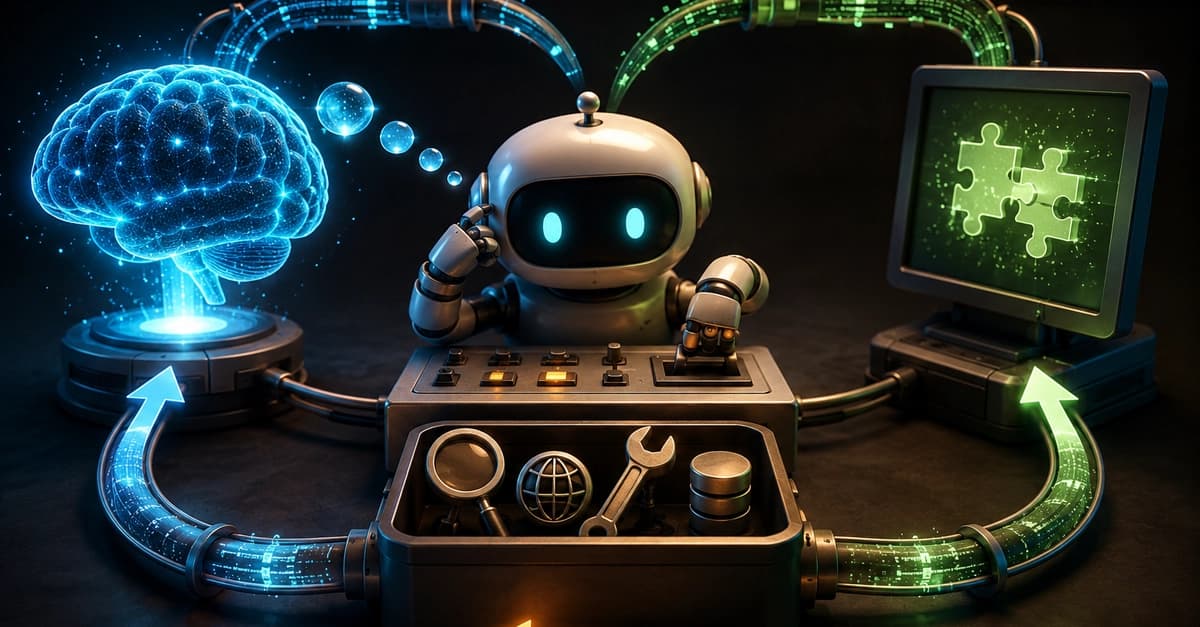
Codex, Claude Code, managed agents, mobile handoff, sandboxes, approval prompts, and rising token costs all point in the same direction: AI agents are no longer just coding assistants. They are becoming long-running actors inside real software environments. MateClaw is built for the layer that comes next: the enterprise agent harness.

Project Links
| Resource | Link |
|---|---|
| GitHub | github.com/matevip/mateclaw |
| Website | claw.mate.vip |
| Documentation | claw.mate.vip/docs |
| Live Demo | claw-demo.mate.vip |
| Releases | github.com/matevip/mateclaw/releases |
The Conversation Has Moved Past “Can AI Write Code?”
For a while, the developer conversation around AI was simple:
Can this model write code?
Can it explain a file?
Can it fix a test?
Can it generate a pull request?
That phase is over.
The more interesting question now is operational:
What happens when the agent keeps working after you close the laptop?
What happens when it needs to run a shell command?
What happens when it wants to edit files?
What happens when it gets blocked and needs human approval?
What happens when the task moves from desktop to mobile?
What happens when your company wants audit logs?
Recent Codex and Claude Code developments make this shift clear. Codex is moving toward remote work loops that can be monitored and redirected from mobile. Claude’s managed-agent writing separates session, harness, and sandbox as first-class concerns. OpenAI’s sandbox engineering posts focus on the hard middle ground between “ask me every time” and “full access.” Anthropic is packaging agents around real industry workflows.
The signal is not just that coding agents are getting better.
The signal is that coding agents are becoming workers.
And workers need an operating model.
The Hidden Layer: Harness, Not Model
Most AI agent demos make the model look like the product. The model reads a prompt, calls a tool, and prints an answer. That is the clean demo path.
But production use does not live on the clean path.
A real agent run includes:
- context assembly
- model selection
- tool routing
- permission checks
- shell or file access
- retries
- human approval
- streaming state
- audit records
- workspace boundaries
- notification channels
- cost tracking
- failure recovery
That is the harness.
The harness is the part around the model that turns a smart assistant into a manageable system.
This is where MateClaw fits.
MateClaw is an open-source, self-hosted Agent Harness OS for teams. It is not trying to replace Codex or Claude Code. It is trying to give organizations a place to run, govern, observe, and extend AI workers.
In a MateClaw deployment, Codex can be a coding capability. Claude Code can be a development employee. Local models can handle private or lower-risk tasks. MCP servers can provide tools. Internal systems can expose workflow-specific APIs. The important part is that all of those capabilities enter through one governed runtime.
Codex / Claude Code / local models / MCP tools / internal APIs
                         ↓
              MateClaw Agent Harness OS
                         ↓
Digital employees / Skills / Tool Guard / Approval / Channels / Audit
That is a different category from “another chat UI.”
Why Mobile Handoff Changes the Agent Product
Codex moving into mobile workflows matters because it changes the social contract between user and agent.
When an assistant only responds while you are watching it, it feels like a tool.
When it keeps working in the background, pauses for clarification, asks for approval, and resumes after you answer from your phone, it starts to feel like delegated work.
That sounds subtle. It is not.
Delegated work creates new product requirements:
- users need to see what is happening
- agents need resumable state
- approvals need to survive page reloads
- notifications need to reach the right person
- tools need risk levels
- history needs to be inspectable
- long tasks need a control plane
MateClaw already treats agents as digital employees, not just chat sessions.

Each digital employee can have a role, goal, tool set, skills, workspace, memory, knowledge context, channel presence, runtime status, and security rules.
That product model matters. An employee can be assigned work. A chatbot can only be prompted.
Sandboxes Are Not Enough
Sandboxing is necessary. It is not sufficient.
The Codex Windows sandbox discussion is useful because it makes a real tradeoff visible:
- require approval for every command and the agent becomes slow
- give full access and supervision becomes weak
- block too much and the agent cannot do useful work
- allow too much and the blast radius becomes unacceptable
Every company adopting agents will face this.
Once an agent can run shell commands, write files, query databases, send messages, or call internal APIs, you need more than a sandbox. You need a policy layer.
MateClaw’s Tool Guard is that policy layer.

Tool Guard can evaluate tool calls before execution:
- low-risk actions can proceed
- risky actions can require approval
- destructive patterns can be blocked
- shell execution can be treated as sensitive by default
- file writes and cron changes can be approval-gated
- audit trails can capture what happened
This is a practical distinction.
A sandbox asks:
Where can the agent run?
A harness asks:
Should this specific action be allowed?
Who approved it?
What was the context?
Can we explain it later?
Enterprises need both.
Approval Should Pause the Run, Not Kill It
Many agent products treat approval as a UI feature: show a confirmation box, then continue if the user clicks yes.
That works for simple flows. It breaks down for long-running work.
Consider a realistic task:
Inspect a repository
Run tests
Find a migration issue
Edit a file
Need approval before touching production config
Pause
Notify the reviewer
Resume after approval
Run verification
Write the report
If approval kills the run, the user has to reconstruct context. That is not delegated work. That is babysitting.
MateClaw treats approval as part of the runtime lifecycle. A run can pause on an approval gate, persist the pending state, then resume after a decision.
That matters for engineering teams, operations teams, and any organization where sensitive actions require a human checkpoint.
The more agents become remote workers, the more this becomes table stakes.
Vendor Choice Is Becoming a Risk Surface
The Codex versus Claude Code debate is easy to frame as a winner-take-all race.
That is probably the wrong frame for enterprises.
The real world will be multi-agent and multi-provider:
- one team may prefer Claude Code for complex refactors
- another may prefer Codex inside ChatGPT workflows
- security teams may want local models for sensitive triage
- support teams may use cheaper models for classification
- operations teams may need deterministic tool policies
- finance teams may care about cost ceilings and audit trails
The more useful question is not:
Which coding agent wins?
It is:
How do we keep control when the winning tool changes?
MateClaw is designed to keep the harness stable while the agent ecosystem changes around it.
It supports multiple model providers, self-hosted deployment, local model paths, skills, MCP-style extension, approval workflows, channel adapters, and workspace boundaries. That gives teams a place to manage capability without hard-binding the organization to one vendor’s interface.
Skills Are the Product Shape Enterprises Actually Want
Anthropic’s industry-agent templates point to another important shift: companies do not want raw agents. They want packaged workflows.
Nobody wants to start from a blank prompt and build “an enterprise agent.” They want:
- an operations assistant
- a code review assistant
- a sales research assistant
- a knowledge manager
- a support triage employee
- a finance analyst
- a release note writer
- a document processing employee
MateClaw’s Skill system is built for this packaging layer.

A useful enterprise agent package should include more than a prompt:
- the employee role
- the system instructions
- the skills it can use
- the tools it can call
- the model preference
- the approval policy
- the workspace scope
- the knowledge sources
- example tasks
- channel bindings
That is how an agent becomes deployable by a team instead of handcrafted by one power user.
Why Java Matters
A lot of agent infrastructure is born in Python notebooks, TypeScript CLIs, and local developer environments.
That is fine for experimentation.
It is not always fine for enterprise operations.
Many companies still run a serious amount of production software on Java and Spring Boot. They have existing CI/CD, observability, identity, database, deployment, and security practices around that stack. If AI agents are going to become part of the production system, they need to fit into the production system.
MateClaw is built with that audience in mind:
- Spring Boot backend
- Vue 3 admin console
- MySQL for production
- H2 for development
- Flyway migrations
- StateGraph-based agent runtime
- multi-channel adapters
- workspace-aware data model
- tool governance and approvals
- one deployable service shape
That is not as trendy as a tiny agent CLI. It is more useful when IT has to run it.
The enterprise agent layer should not depend on one developer’s laptop.
Multi-Channel Is Not a Nice-to-Have
Work does not happen in one place.
Engineering teams live in GitHub, Slack, terminals, IDEs, and issue trackers. Chinese enterprise teams may use DingTalk, Feishu, WeCom, or QQ. Support teams may live in webchat. Managers may approve from mobile. Operators may need alerts in a channel, not a dashboard.
MateClaw assumes that agents need to exist across channels.

The important idea is continuity.
The same digital employee should be able to:
- answer in the web console
- receive a task from a team channel
- notify a reviewer when approval is needed
- resume work after a decision
- keep the same memory and tool policy
- preserve auditability across surfaces
This is where the “remote worker” metaphor becomes real.
If an AI agent is part of the team, it has to show up where the team works.
What MateClaw Is Not
MateClaw is not a replacement for every coding assistant.
If you are one developer using Claude Code or Codex locally, and you do not need approvals, audit trails, workspaces, or multi-channel operations, you may not need a full harness.
That is fine.
MateClaw becomes interesting when the question changes from personal productivity to organizational adoption:
How do we let agents touch real systems without losing control?
How do we route work across models and tools?
How do we make actions visible to operators?
How do we package reusable agent roles?
How do we keep data and approvals inside our own environment?
That is the gap MateClaw is trying to fill.
The Next Agent Platform Will Look More Like Infrastructure
The first wave of AI tools felt like apps.
The next wave will look more like infrastructure.
It will include:
- model routing
- tool policy
- sandbox integration
- approval workflows
- skill packaging
- memory lifecycle
- workspace isolation
- audit logging
- multi-channel delivery
- runtime observability
- human handoff
Those are not optional extras. They are what make agents acceptable inside organizations.
Codex and Claude Code are showing what powerful agents can do.
MateClaw is focused on what organizations need around those agents.
That is why the phrase “Agent Harness OS” matters. It is not about branding. It is about locating the missing layer.
The future is not one agent to rule them all.
The future is many agents, many models, many tools, and one governed place to run them.
References
- OpenAI: Work with Codex from anywhere
- OpenAI: Building Codex Windows sandbox
- OpenAI: Daybreak / Codex Security
- Anthropic Engineering: Scaling Managed Agents
- Anthropic News: Agents for financial services
- MateClaw GitHub: github.com/matevip/mateclaw
- MateClaw Documentation: claw.mate.vip/docs
- MateClaw Demo: claw-demo.mate.vip