
Can we automatize scientific discovery in the cognitive sciences?
arXiv cs.AI / 3/24/2026
💬 OpinionSignals & Early TrendsIdeas & Deep AnalysisModels & Research
Key Points
- The paper argues that cognitive science discovery is limited by manual intervention and a narrow hypothesis search driven by researchers’ intuition and backgrounds.
- It proposes an end-to-end automated “in silico science of the mind” pipeline where LLMs generate experimental paradigms, foundation models simulate behavioral data, and LLMs synthesize cognitive-model code.
- The workflow closes the loop by optimizing an “interestingness” score assessed by an LLM-critic, enabling iterative, high-throughput theory discovery.
- The approach is positioned as a scalable engine for surfacing experiments and candidate mechanisms that can later be validated with real human participants.
- Overall, it reframes cognitive-science theory development as an automated discovery loop akin to computational search over a large space of algorithmic hypotheses.
Related Articles
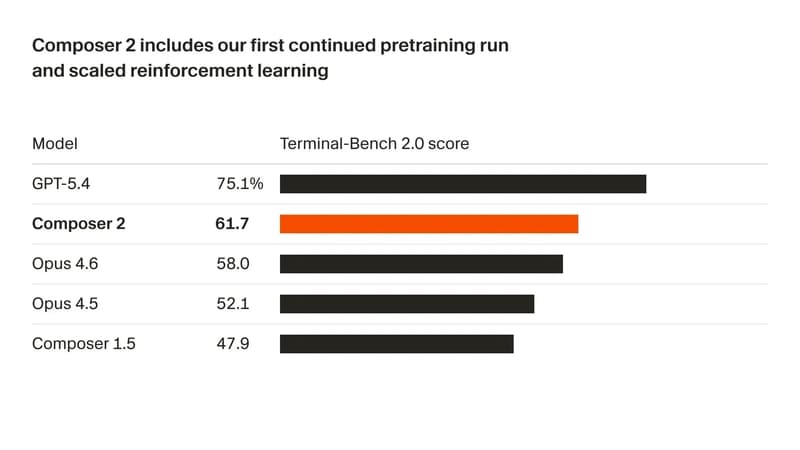
Composer 2: What is new and Compares with Claude Opus 4.6 & GPT-5.4
Dev.to
How UCP Breaks Your E-Commerce Tracking Stack: A Platform-by-Platform Analysis
Dev.to
AI Text Analyzer vs Asking Friends: Which Gives Better Perspective?
Dev.to
[D] Cathie wood claims ai productivity wave is starting, data shows 43% of ceos save 8+ hours weekly
Reddit r/MachineLearning

Microsoft hires top AI researchers from Allen Institute for AI for Suleyman's Superintelligence team
THE DECODER


