
See Through the Noise: Improving Domain Generalization in Gaze Estimation
arXiv cs.CV / 4/21/2026
📰 NewsModels & Research
Key Points
- The paper studies how label noise from difficult-to-obtain gaze annotations can harm domain generalization in gaze estimation models.
- It proposes the See-Through-Noise (SeeTN) framework to mitigate label noise by building a prototype-based semantic embedding space that preserves topology between gaze features and continuous labels.
- SeeTN uses feature–label affinity consistency to separate noisy samples from clean ones and applies affinity regularization on the semantic manifold to transfer gaze information from clean to noisy data.
- Experiments show SeeTN improves cross-domain generalization under source-domain label noise while maintaining source-domain accuracy, emphasizing that noise should be explicitly handled in generalized gaze estimation.
- Overall, the work connects noise robustness with domain-invariant gaze relationships enforced through semantic structure alignment.
Related Articles
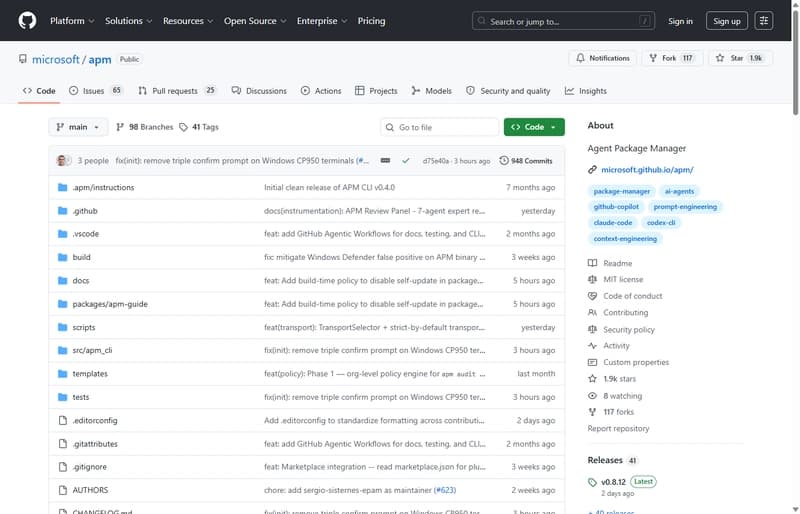
Agent Package Manager (APM): A DevOps Guide to Reproducible AI Agents
Dev.to
3 Things I Learned Benchmarking Claude, GPT-4o, and Gemini on Real Dev Work
Dev.to
Open Source Contributors Needed for Skillware & Rooms (AI/ML/Python)
Dev.to
Production LLM systematically violates tool schema constraints to invent UI features; observed over ~2,400 messages [D]
Reddit r/MachineLearning
My AI system kept randomly switching to French mid-answer and it took me way too long to figure out why
Reddit r/artificial


