
LogSigma at SemEval-2026 Task 3: Uncertainty-Weighted Multitask Learning for Dimensional Aspect-Based Sentiment Analysis
arXiv cs.AI / 3/27/2026
💬 OpinionIdeas & Deep AnalysisModels & Research
Key Points
- The LogSigma paper introduces a system for SemEval-2026 Task 3 focused on dimensional aspect-based sentiment analysis, predicting continuous Valence and Arousal scores rather than discrete sentiment labels.
- It tackles cross-language and cross-domain differences in prediction difficulty by learning task-specific homoscedastic uncertainty (log-variance) to automatically weight multiple regression objectives during training.
- The approach uses language-specific encoders and multi-seed ensembling, and reports 1st-place results on five datasets across both tracks.
- The authors find that learned variance weights differ substantially by language, indicating that optimal balancing is language-dependent and cannot be reliably set in advance.
広告
Related Articles

Got My 39-Agent System Audited Live. Here's What the Maturity Scorecard Revealed.
Dev.to

The Redline Economy
Dev.to

$500 GPU outperforms Claude Sonnet on coding benchmarks
Dev.to

From Scattershot to Sniper: AI for Hyper-Personalized Media Lists
Dev.to
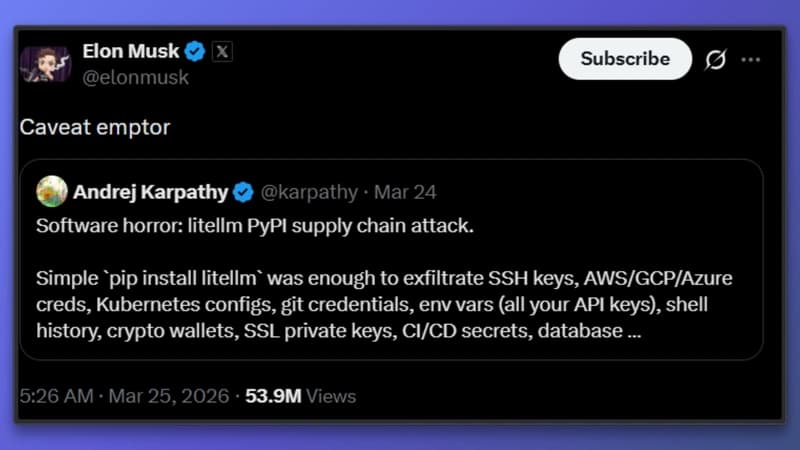
The LiteLLM Supply Chain Attack: A Wake-Up Call for AI Infrastructure
Dev.to


