
Student Classroom Behavior Recognition Based on Improved YOLOv8s
arXiv cs.CV / 5/1/2026
📰 NewsDeveloper Stack & InfrastructureModels & Research
Key Points
- The paper introduces ALC-YOLOv8s, an improved YOLOv8s-based model for automatically recognizing student classroom behaviors from real classroom video.
- To handle challenges such as many densely packed small targets, frequent occlusions, and imbalanced class distributions, it adds modules including SPPF-LSKA for richer contextual feature extraction and CFC-CRB/SFC-G2 for better multi-scale feature fusion.
- It uses ATFLoss to strengthen learning for minority classes and hard samples, aiming to improve robustness under uneven behavior-category frequencies.
- Experiments report that ALC-YOLOv8s outperforms the baseline, gaining 1.8% in mAP50 and 2.1% in mAP50-95, and it performs competitively against mainstream detection methods in complex classroom settings.
Related Articles
Every handle invocation on BizNode gets a WFID — a universal transaction reference for accountability. Full audit trail,...
Dev.to
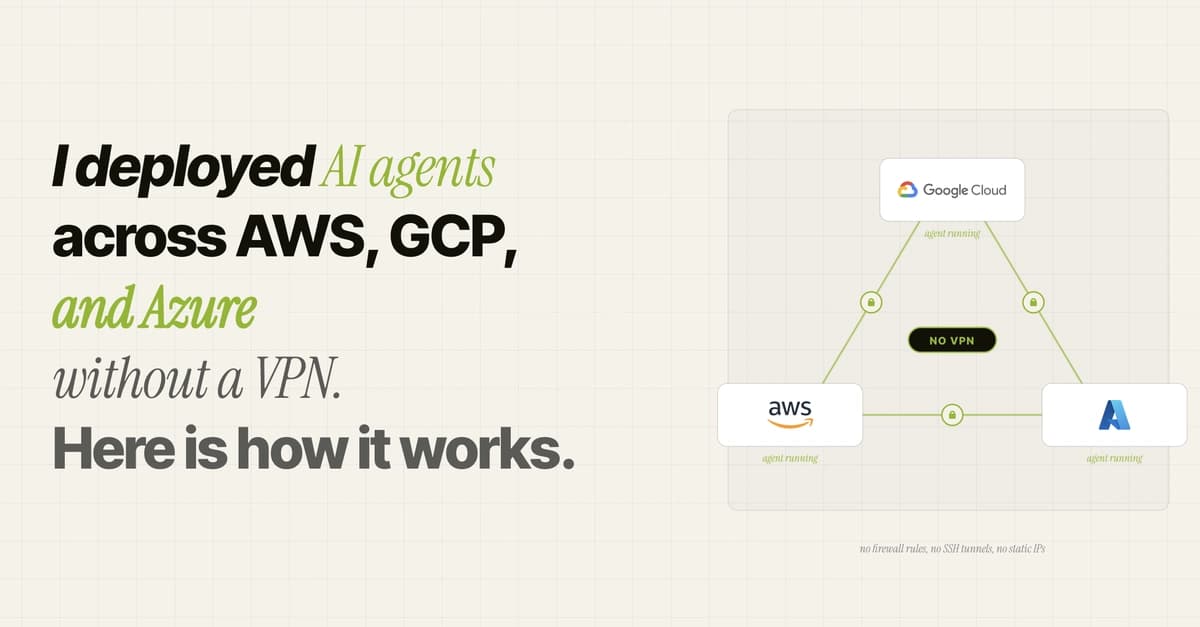
I deployed AI agents across AWS, GCP, and Azure without a VPN. Here is how it works.
Dev.to
Panduan Lengkap TestSprite MCP Server — Dokumentasi Getting Started dalam Bahasa Indonesia
Dev.to

Every Telegram conversation becomes a qualified lead. BizNode captures name, email, and business details automatically while...
Dev.to

MCP, Skills, AI Agents, and New Models: The New Stack for Software Development
Dev.to


