
DPC-VQA: Decoupling Quality Perception and Residual Calibration for Video Quality Assessment
arXiv cs.CV / 4/15/2026
💬 OpinionSignals & Early TrendsIdeas & Deep AnalysisModels & Research
Key Points
- The paper introduces DPC-VQA, arguing that pretrained multimodal LLMs provide a strong perceptual prior for video quality assessment while the key issue is efficiently calibrating outputs to a target MOS space.
- DPC-VQA freezes the base MLLM for quality estimation and adds a lightweight calibration branch that predicts a residual correction, avoiding expensive end-to-end retraining.
- Experiments on UGC and AIGC video quality assessment benchmarks show competitive results versus baseline methods while training with under 2% of the trainable parameters typical of conventional MLLM-based approaches.
- The approach remains effective with only 20% of the MOS labels, reducing the annotation burden for adapting to new scenarios.
- The authors state that code will be released upon publication.
Related Articles

Black Hat Asia
AI Business
The Complete Guide to Better Meeting Productivity with AI Note-Taking
Dev.to
5 Ways Real-Time AI Can Boost Your Sales Call Performance
Dev.to
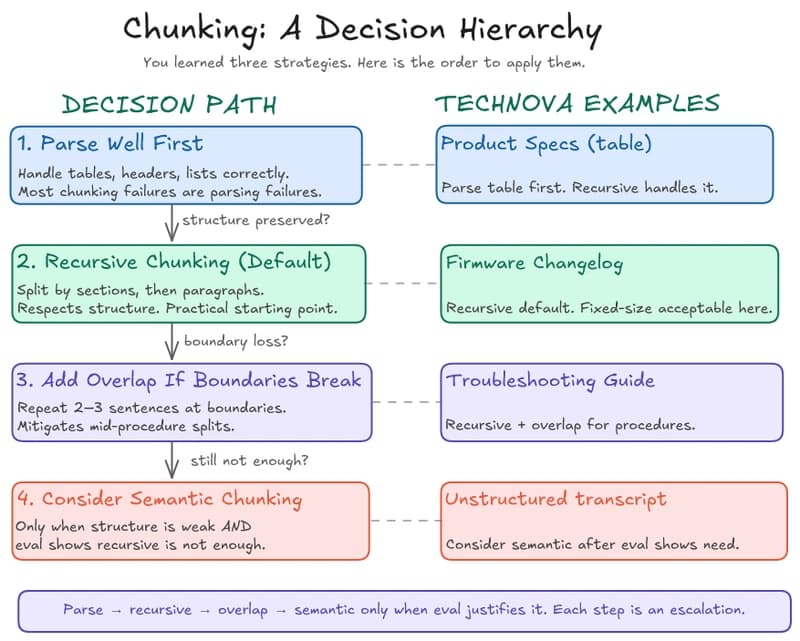
RAG in Practice — Part 4: Chunking, Retrieval, and the Decisions That Break RAG
Dev.to
Why dynamically routing multi-timescale advantages in PPO causes policy collapse (and a simple decoupled fix) [R]
Reddit r/MachineLearning


