
GPA-VGGT:Adapting VGGT to Large Scale Localization by Self-Supervised Learning with Geometry and Physics Aware Loss
arXiv cs.RO / 4/3/2026
💬 OpinionIdeas & Deep AnalysisModels & Research
Key Points
- The paper introduces GPA-VGGT, a self-supervised training framework for the Visual Geometry Grounded Transformer (VGGT) to improve camera localization in large-scale, unlabeled environments.
- It replaces hard-label supervision by extending pair-wise geometric relations to sequence-wise geometric constraints, sampling multiple source frames and projecting them onto target frames to enforce temporal feature consistency.
- The method uses a joint optimization loss that combines physical photometric consistency with geometric constraints, enabling learning of multi-view geometry without ground truth labels.
- Experiments report fast convergence (within hundreds of iterations) and significant gains in large-scale localization, including improvements to cross-view attention layers as well as camera and depth prediction heads.
- The authors state they will release the code on GitHub, supporting reproducibility and further research use.
Related Articles

90000 Tech Workers Got Fired This Year and Everyone Is Blaming AI but Thats Not the Whole Story
Dev.to

Microsoft’s $10 Billion Japan Bet Shows the Next AI Battleground Is National Infrastructure
Dev.to
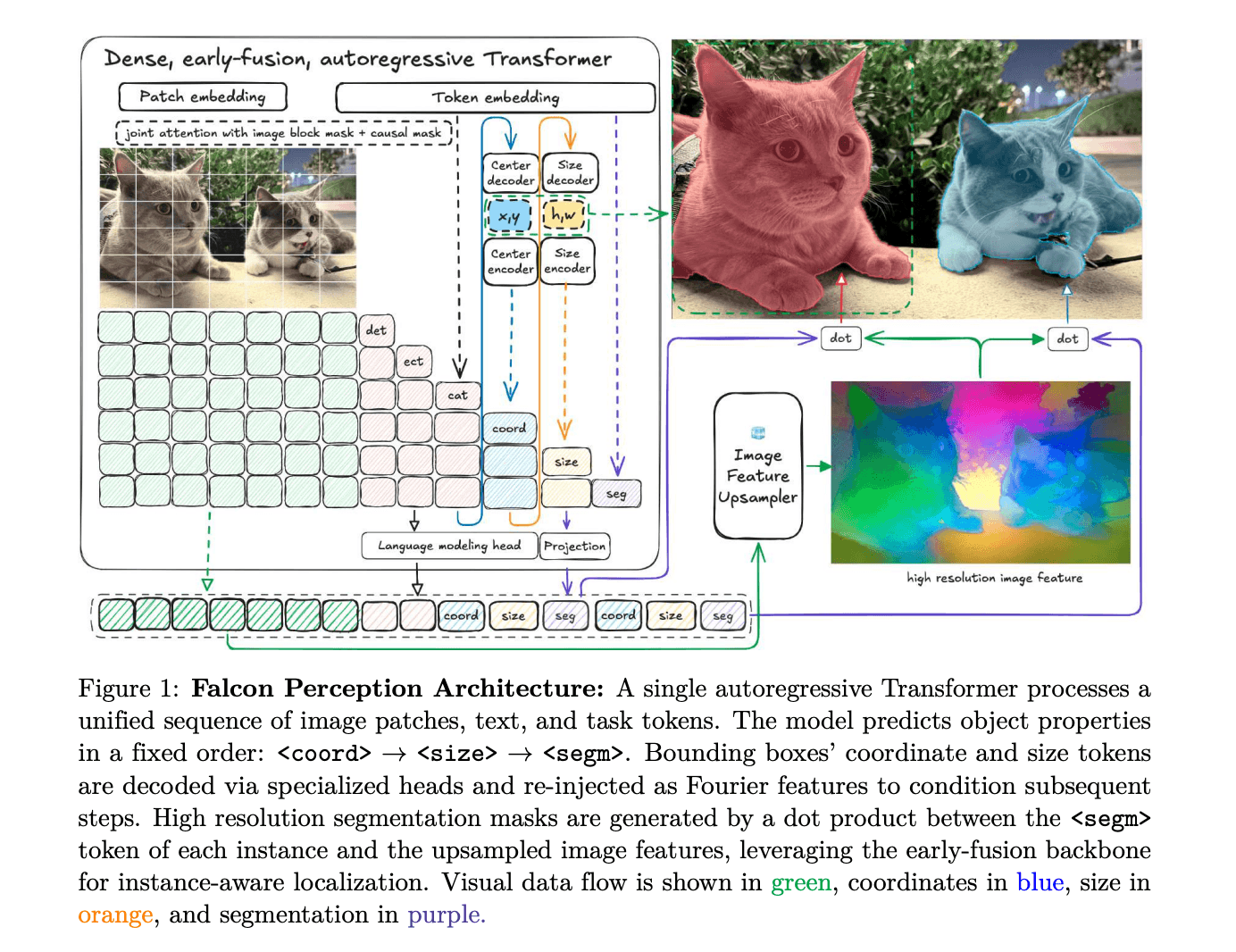
TII Releases Falcon Perception: A 0.6B-Parameter Early-Fusion Transformer for Open-Vocabulary Grounding and Segmentation from Natural Language Prompts
MarkTechPost

The house asked me a question
Dev.to

Precision Clip Selection: How AI Suggests Your In and Out Points
Dev.to


