
Generalization Bounds for Spectral GNNs via Fourier Domain Analysis
arXiv cs.LG / 4/2/2026
💬 OpinionSignals & Early TrendsIdeas & Deep AnalysisModels & Research
Key Points
- The paper studies spectral graph neural networks by transforming them into the graph Fourier domain, where each layer acts as an element-wise frequency update, making depth and polynomial order explicit.
- It proves that Gaussian complexity is invariant under the Graph Fourier Transform, enabling the authors to derive data-dependent generalization bounds that also account for depth and order.
- The analysis includes stability estimates, linking model behavior to whether perturbations are amplified through layers and polynomial expansions.
- For linear variants, the derived bounds are tighter than existing results, and experiments on real graphs show that a data-dependent term correlates with the observed generalization gap across different polynomial bases.
- The findings suggest practical guidance for choosing polynomial bases and avoiding frequency amplification across layers to improve generalization.
Related Articles

Black Hat Asia
AI Business
v5.5.0
Transformers(HuggingFace)Releases
Bonsai (PrismML's 1 bit version of Qwen3 8B 4B 1.7B) was not an aprils fools joke
Reddit r/LocalLLaMA
Big Tech firms are accelerating AI investments and integration, while regulators and companies focus on safety and responsible adoption.
Dev.to
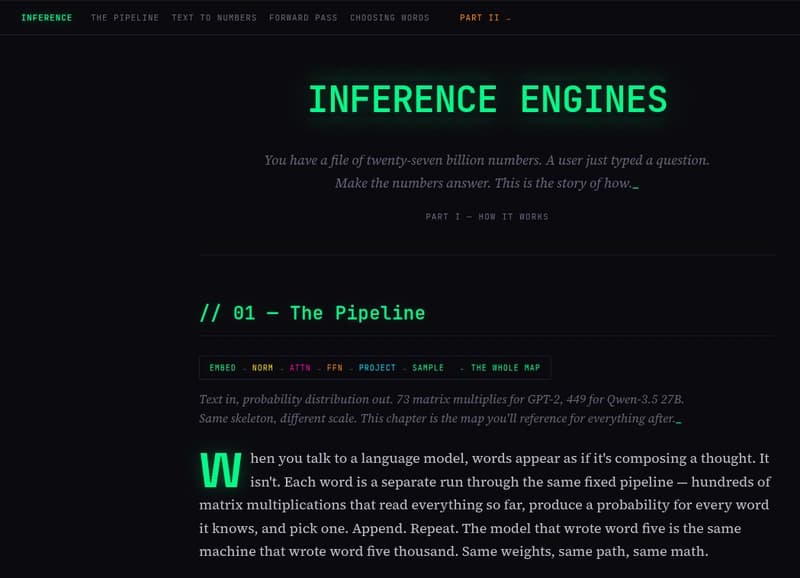
Inference Engines - A visual deep dive into the layers of an LLM
Dev.to


