
No-Worse Context-Aware Decoding: Preventing Neutral Regression in Context-Conditioned Generation
arXiv cs.CL / 4/21/2026
📰 NewsModels & Research
Key Points
- The paper studies “neutral regression,” where LLMs overwrite correct answers when given non-informative external context, and formalizes it as a do-no-harm requirement.
- It measures neutrality by tracking accuracy drops on baseline-correct items under answer-consistent (but unhelpful) contexts.
- The proposed No-Worse Context-Aware Decoding (NWCAD) is a decode-time adapter using a two-stream architecture and a two-stage gating mechanism to decide whether to use context.
- When context appears non-informative, NWCAD backs off to no-context decoding; otherwise it applies context-conditioned decoding with a CAD-style fallback under uncertainty.
- Experiments on benchmarks that disentangle do-no-harm reliability from context utilization show NWCAD prevents neutral regression while maintaining gains on genuinely helpful contexts.
Related Articles
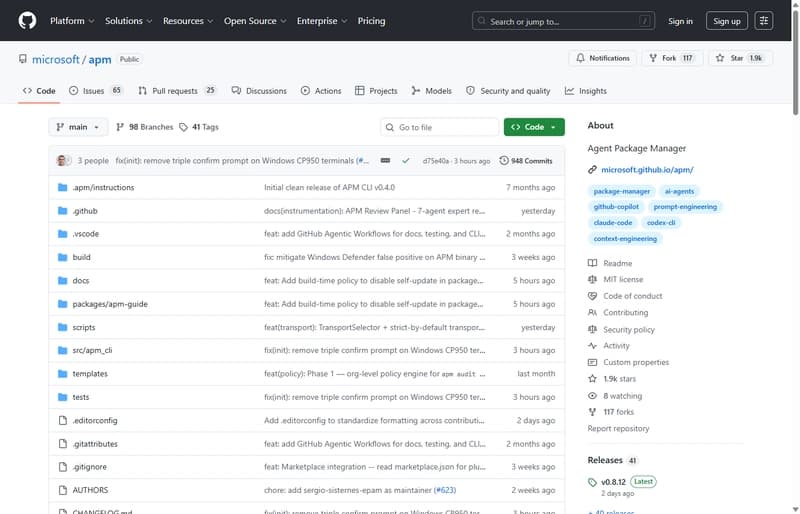
Agent Package Manager (APM): A DevOps Guide to Reproducible AI Agents
Dev.to
3 Things I Learned Benchmarking Claude, GPT-4o, and Gemini on Real Dev Work
Dev.to
Open Source Contributors Needed for Skillware & Rooms (AI/ML/Python)
Dev.to
Production LLM systematically violates tool schema constraints to invent UI features; observed over ~2,400 messages [D]
Reddit r/MachineLearning
My AI system kept randomly switching to French mid-answer and it took me way too long to figure out why
Reddit r/artificial


