
Understanding Self-Supervised Learning via Latent Distribution Matching
arXiv cs.LG / 5/6/2026
📰 NewsIdeas & Deep AnalysisModels & Research
Key Points
- The paper proposes a unifying theoretical framework for self-supervised learning (SSL) by casting it as Latent Distribution Matching (LDM).
- In LDM, representations are learned to maximize log-probability under an assumed latent model (alignment) while also maximizing latent entropy to prevent representation collapse (uniformity).
- The framework unifies multiple SSL families—independent component analysis, contrastive/non-contrastive SSL, predictive SSL, and stop-gradient methods—under a single viewpoint.
- Using LDM, the authors derive a nonlinear, sampling-free Bayesian filtering model with a Kalman-style predictor for high-dimensional time series.
- The paper also proves that predictive LDM can produce identifiable latent representations under mild assumptions, even when using nonlinear predictors.
Related Articles

Top 10 Free AI Tools for Students in 2026: The Ultimate Study Guide
Dev.to

AI as Your Contingency Co-Pilot: Automating Wedding Day 'What-Ifs'
Dev.to
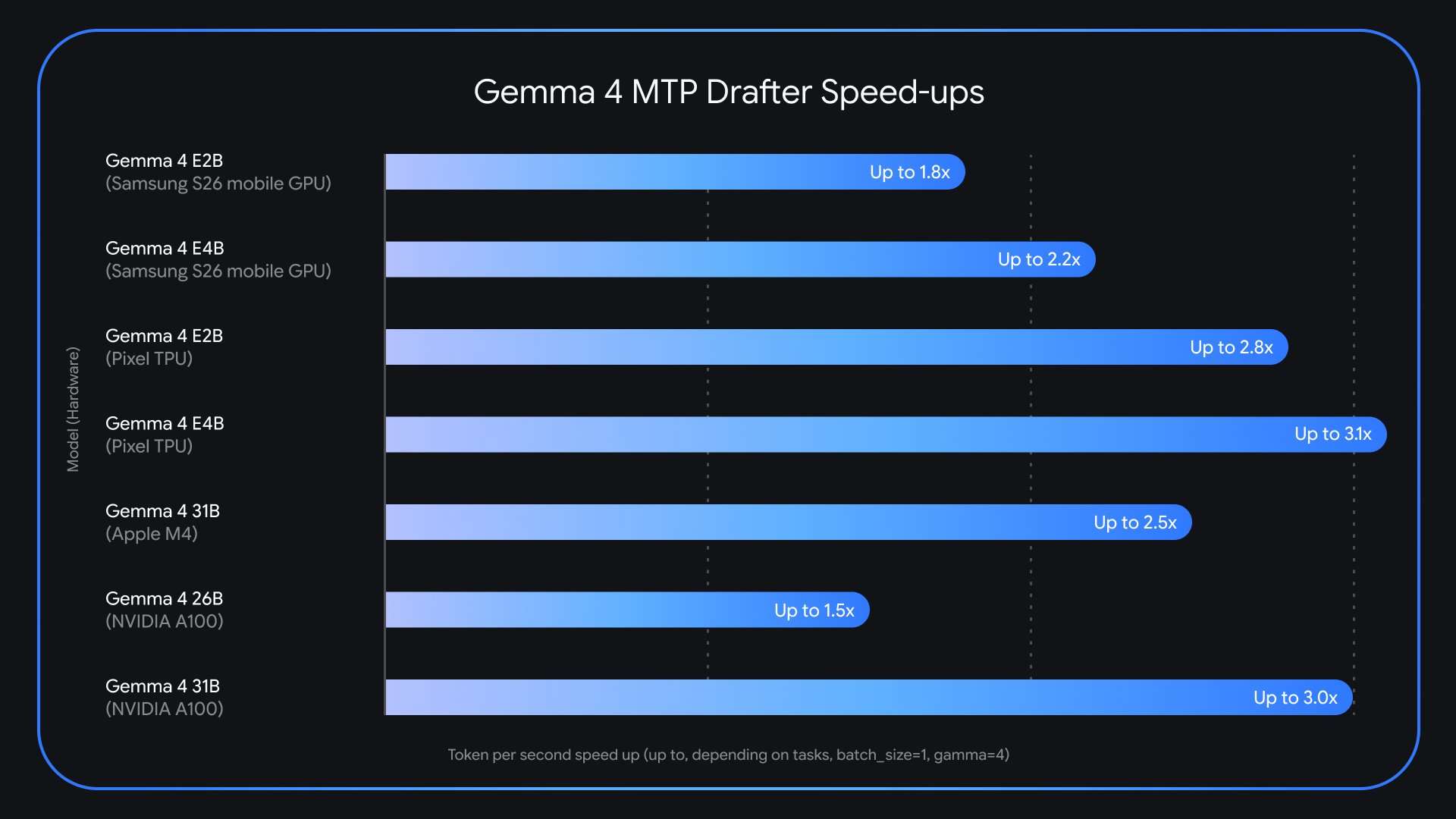
Google AI Releases Multi-Token Prediction (MTP) Drafters for Gemma 4: Delivering Up to 3x Faster Inference Without Quality Loss
MarkTechPost
When Claude Hallucinates in Court: The Latham & Watkins Incident and What It Means for Attorney Liability
MarkTechPost
Solidity LM surpasses Opus
Reddit r/LocalLLaMA


