
World2Rules: A Neuro-Symbolic Framework for Learning World-Governing Safety Rules for Aviation
arXiv cs.RO / 4/1/2026
📰 NewsIdeas & Deep AnalysisModels & Research
Key Points
- The paper introduces World2Rules, a neuro-symbolic framework that learns formal “world-governing” aviation safety rules from multimodal operational data plus crash/incident reports.
- It uses neural models to propose candidate symbolic facts from noisy text/visual inputs, then applies inductive logic programming as a verification layer for stronger formal grounding.
- A hierarchical reflective reasoning process enforces consistency across examples, subsets, and rules, filtering unreliable evidence and pruning unsupported hypotheses to limit error propagation.
- In evaluations on real-world aviation safety data, World2Rules improves rule-learning performance, achieving higher F1 than purely neural and single-pass neuro-symbolic baselines, while producing compact, interpretable first-order logic.
- The approach targets safety-critical suitability by combining interpretability and formal analysis with robustness to noisy, inconsistent, and sparse failure-case evidence.
Related Articles

Show HN: 1-Bit Bonsai, the First Commercially Viable 1-Bit LLMs
Dev.to

I Built an AI Agent That Can Write Its Own Tools When It Gets Stuck
Dev.to

Agent Self-Discovery: How AI Agents Find Their Own Wallets
Dev.to
[P] Federated Adversarial Learning
Reddit r/MachineLearning
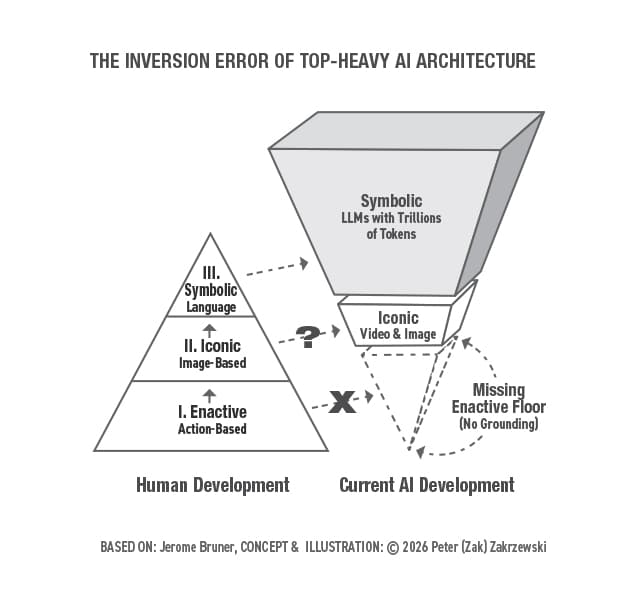
The Inversion Error: Why Safe AGI Requires an Enactive Floor and State-Space Reversibility
Towards Data Science


