
CHASE: Competing Hypotheses for Ambiguity-Aware Selective Prediction
arXiv cs.CV / 5/5/2026
📰 NewsModels & Research
Key Points
- CHASE (Competing Hypotheses for Ambiguity-Aware Selective Prediction) improves selective prediction by comparing structured temporal explanations rather than relying on uncertainty from a single predictive branch.
- The method is designed for partial observability, where local evidence may contradict and standard confidence scores can mislead; CHASE uses competing-hypothesis margins to separate safe decisions from fundamentally ambiguous cases.
- CHASE trains a ranking-aware selector that exploits the collapse of score gaps under true ambiguity to better decide when to abstain.
- Experiments on hidden connectivity inference using a physically grounded simulator (inspired by giant unilamellar vesicles) and zero-shot transfer to real videos show statistically significant gains over uncertainty baselines across no-abstain accuracy, three-way accuracy, and ambiguity-aligned abstention.
- Reported improvements include up to 11.0% relative mean improvement in overall alignment and up to 8.8% relative boost in three-way accuracy in the very-high ambiguity regime, while reducing overall risk by 9.9% at 90% coverage.
Related Articles
Why Retail Chargeback Recovery Could Be AgentHansa's First Real PMF
Dev.to
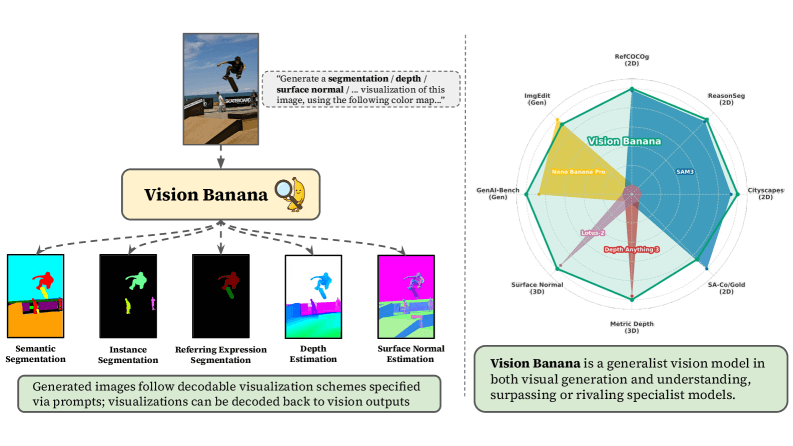
Last Week in AI #340 - OpenAI vs Musk + Microsoft, DeepSeek v4, Vision Banana
Last Week in AI

Trying to train tiny LLMs on length constrained reddit posts summarization task using GRPO on 3xMac Minis - updates!
Reddit r/LocalLLaMA

Uber Shares What Happens When 1.500 AI Agents Hit Production
Reddit r/artificial
vibevoice.cpp: Microsoft VibeVoice (TTS + long-form ASR with diarization) ported to ggml/C++, runs on CPU/CUDA/Metal/Vulkan, no Python at inference
Reddit r/LocalLLaMA


