
Distilling Photon-Counting CT into Routine Chest CT through Clinically Validated Degradation Modeling
arXiv cs.CV / 4/9/2026
💬 OpinionSignals & Early TrendsIdeas & Deep AnalysisModels & Research
Key Points
- The paper introduces SUMI, a simulated degradation-to-enhancement framework that learns to convert conventional energy-integrating CT (EICT) into clinically plausible photon-counting CT (PCCT)-like images using realistic artifact degradation modeling.
- To avoid needing large-scale paired EICT/PCCT acquisitions, the authors validate the simulated degradations with board-certified radiologists, enabling supervision based on unpaired reference quality.
- They train a latent diffusion model on 1,046 PCCT scans and a very large EICT corpus (405,379 scans from 145 hospitals) to learn reusable CT latent features for broader generative medical imaging tasks.
- The work builds a large publicly available dataset of 17,316+ EICT volumes enhanced to PCCT-like quality, including radiologist-validated voxel-wise anatomy annotations (airway trees, arteries, veins, lungs, lobes).
- Experimental results show SUMI outperforms prior image translation methods by 15% (SSIM) and 20% (PSNR), improves radiologist-rated clinical utility, and boosts lesion detection sensitivity by up to 15% and F1 by up to 10% in downstream evaluations.
Related Articles

Black Hat Asia
AI Business
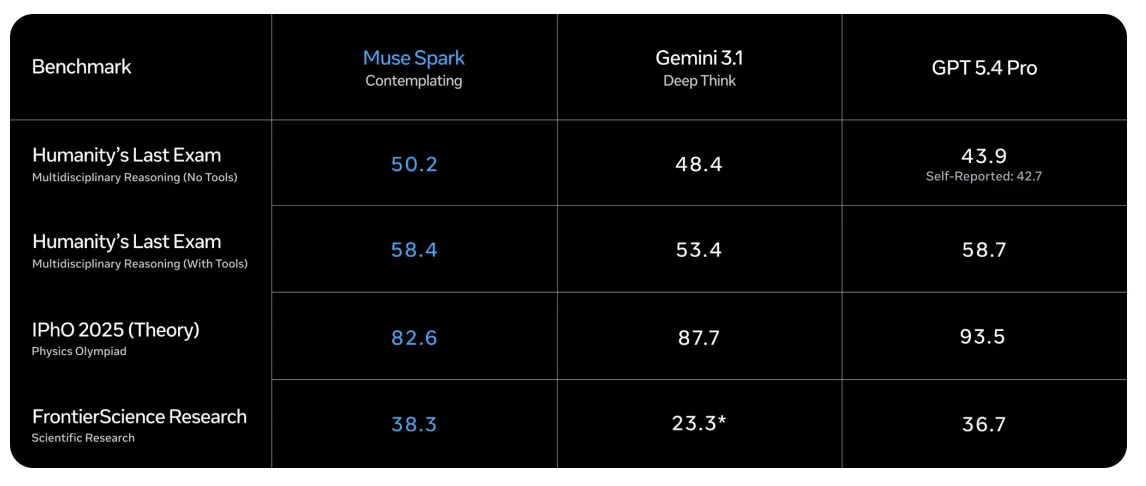
Meta Superintelligence Lab Releases Muse Spark: A Multimodal Reasoning Model With Thought Compression and Parallel Agents
MarkTechPost

Chatbots are great at manipulating people to buy stuff, Princeton boffins find
The Register
I tested and ranked every ai companion app I tried and here's my honest breakdown
Reddit r/artificial

Big Tech firms are accelerating AI investments and integration, while regulators and companies focus on safety and responsible adoption.
Dev.to


