
Automated detection of pediatric congenital heart disease from phonocardiograms using deep and handcrafted feature fusion
arXiv cs.LG / 4/29/2026
📰 NewsSignals & Early TrendsModels & Research
Key Points
- The paper presents a new deep-learning method to detect pediatric congenital heart disease (CHD) from phonocardiogram (PCG) recordings using a fusion of deep features and handcrafted features.
- It targets a key clinical bottleneck: echocardiography is expensive and scarce in low-resource regions, and clinician interpretation variability can delay diagnosis.
- The study uses PCG data from 751 pediatric subjects in Bangladesh across four auscultation locations (mitral, aortic, pulmonary, and tricuspid valves), with labels confirmed by cardiologists as CHD or non-CHD.
- The model reports strong performance metrics, including 92% accuracy, 91% sensitivity, 91% specificity, 96% AUROC, and 92% F1-score under a patient-wise 70/20/10 train/validation/test split.
- The authors suggest the approach could enable efficient real-time, cost-effective remote screening of CHDs in low-resource settings.
Related Articles
LLMs will be a commodity
Reddit r/artificial

HubSpot Just Legitimized AEO: What It Means for Your Brand AI Visibility
Dev.to

What it feels like to have to have Qwen 3.6 or Gemma 4 running locally
Reddit r/LocalLLaMA
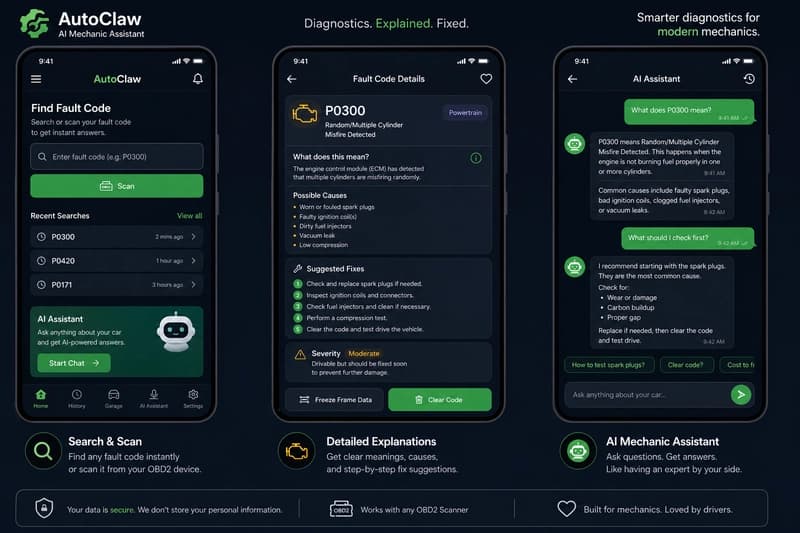
From Fault Codes to Smart Fixes: How Google Cloud NEXT ’26 Inspired My AI Mechanic Assistant
Dev.to

Dex lands $5.3M to grow its AI-driven talent matching platform
Tech.eu


