
Evolution and compression in LLMs: On the emergence of human-aligned categorization
arXiv cs.CL / 3/16/2026
💬 OpinionIdeas & Deep AnalysisModels & Research
Key Points
- The paper investigates whether LLMs can develop human-aligned semantic categories by testing color naming and the Information Bottleneck tradeoff, comparing model outputs to human data.
- It finds that LLMs vary in IB-alignment and complexity with model size and instruction tuning, with larger instruction-tuned models showing better alignment and IB-efficiency.
- The authors introduce Iterated in-Context Language Learning (IICLL) to simulate cultural evolution of color naming in LLMs and observe that LLMs progressively restructure random systems toward greater IB-efficiency, similar to humans.
- Only the strongest in-context models (Gemini 2.0) reproduce the full range of near-optimal IB tradeoffs seen in humans, while other state-of-the-art models converge to low-complexity solutions.
- The results suggest human-aligned semantic categories can emerge in LLMs via the same cognitive principle that drives semantic efficiency in humans, linking AI semantics to human categorization theory.
Related Articles
Day 10: 230 Sessions of Hustle and It Comes Down to One Person Reading a Document
Dev.to

5 Dangerous Lies Behind Viral AI Coding Demos That Break in Production
Dev.to
Two bots, one confused server: what Nimbus revealed about AI agent identity
Dev.to
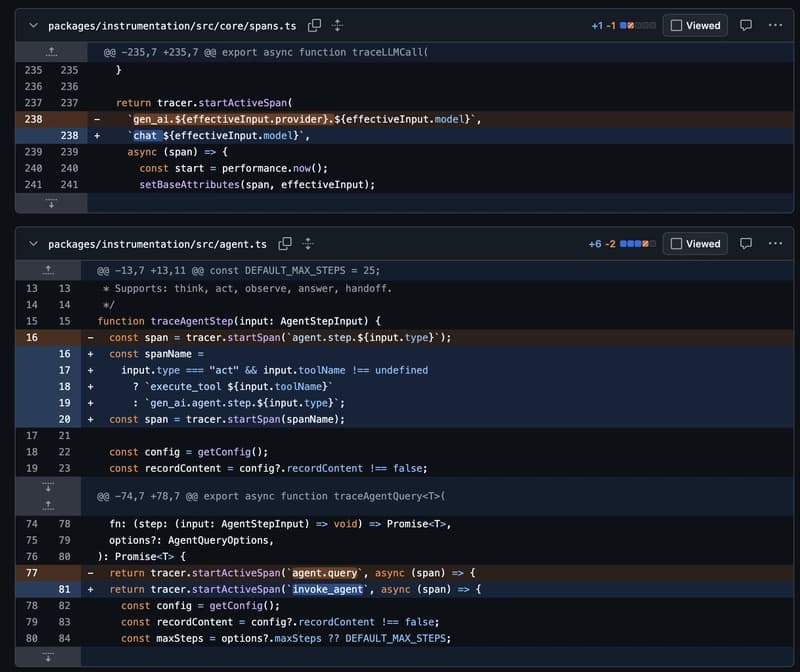
OpenTelemetry just standardized LLM tracing. Here's what it actually looks like in code.
Dev.to
PIXIU: A Large Language Model, Instruction Data and Evaluation Benchmark forFinance
Dev.to


