
PilotBench: A Benchmark for General Aviation Agents with Safety Constraints
arXiv cs.AI / 4/13/2026
📰 NewsSignals & Early TrendsIdeas & Deep AnalysisModels & Research
Key Points
- PilotBench is introduced as a new benchmark to test whether LLM-based agents can predict safety-critical flight trajectory and attitude while respecting explicit safety constraints.
- The benchmark is built from 708 real-world general aviation trajectories across nine distinct flight phases, using synchronized 34-channel telemetry to evaluate both semantic reasoning and physics-governed prediction.
- A new composite metric, Pilot-Score, combines 60% regression accuracy with 40% instruction adherence and safety compliance to measure performance in a balanced way.
- Across 41 evaluated models, traditional forecasters show better numeric precision (lower MAE), while LLMs demonstrate higher instruction-following/controllability but with a precision tradeoff, revealing a “Precision-Controllability Dichotomy.”
- Phase-stratified results show LLM performance degrades sharply in high-workload phases (e.g., Climb and Approach), motivating hybrid systems that pair LLM symbolic reasoning with specialized numerical forecasters.
Related Articles
Small NSFW model for chatbot
Reddit r/LocalLLaMA

ChatGPT for Nurses: Prompts That Help You Document, Communicate, and Study
Dev.to

I Added a Stopwatch to My AI in 1 LOC Using the Livingrimoire While Corporations Need a Year
Dev.to
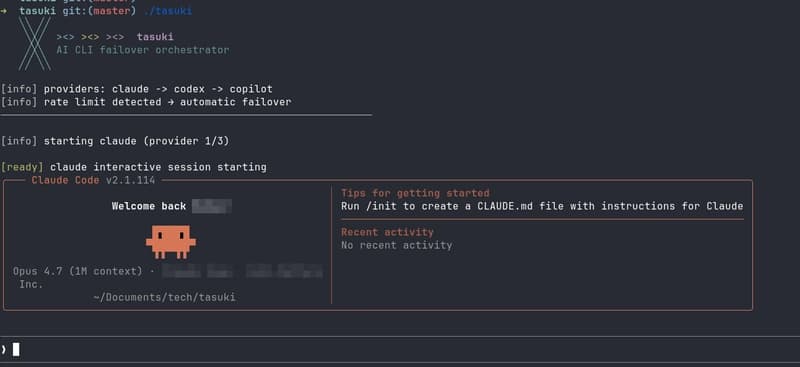
Built tasuki — an AI CLI Orchestrator that Seamlessly Hands Off Between Tools
Dev.to

I built a GNOME extension for Codex with local/remote history, live filters, Markdown export, and a read-only MCP server
Reddit r/artificial


