
From Admission to Invariants: Measuring Deviation in Delegated Agent Systems
arXiv cs.AI / 4/21/2026
📰 NewsSignals & Early TrendsIdeas & Deep AnalysisModels & Research
Key Points
- The paper argues that enforcement-only governance in delegated autonomous agent systems can fail to detect behavioral drift because the enforcement signal is structurally “below” the measurement layer for deviation.
- It presents a Non-Identifiability Theorem showing that the admissible behavior space A0 set at admission time cannot be determined from the enforcement signal g under a Local Observability Assumption.
- The core reason for the impossibility is a mismatch between local, point-wise action checks (what g does) and global, trajectory-level properties (what A0 encodes).
- To address this, the authors define an Invariant Measurement Layer (IML) that retains access to the generative model of A0, enabling detection of admission-time drift with provably finite detection delay.
- Experiments across multiple drift scenarios, an n8n webhook pipeline, and a LangGraph StateGraph agent show enforcement triggers zero violations while IML detects drift within 9–258 steps.
Related Articles

¿Hasta qué punto podría la IA reemplazarnos en nuestros trabajos? A veces creo que la gente exagera un poco.
Reddit r/artificial
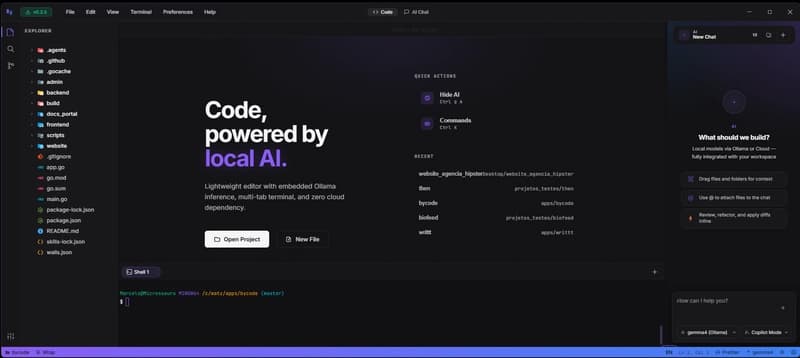
Why I Built byCode: A 100% Local, Privacy-First AI IDE
Dev.to

Magnificent irony as Meta staff unhappy about running surveillance software on work PCs
The Register

ETHENEA (ETHENEA Americas LLC) Analyst View: Asset Allocation Resilience in the 2026 Global Macro Cycle
Dev.to
Blaze Balance Engine SaaS
Dev.to


