
TreeGaussian: Tree-Guided Cascaded Contrastive Learning for Hierarchical Consistent 3D Gaussian Scene Segmentation and Understanding
arXiv cs.CV / 4/7/2026
💬 OpinionSignals & Early TrendsIdeas & Deep AnalysisModels & Research
Key Points
- TreeGaussian is a new research method for improving hierarchical and whole-part 3D semantic segmentation using 3D Gaussian Splatting by explicitly modeling object-part relationships via a multi-level object tree.
- The approach uses a two-stage cascaded contrastive learning strategy that refines features progressively from global to local to reduce redundancy, mitigate contrastive saturation, and stabilize training.
- It introduces a Consistent Segmentation Detection (CSD) mechanism and a graph-based denoising module to improve cross-view segmentation consistency and suppress unstable/low-quality Gaussian points.
- Experiments, including open-vocabulary 3D object selection and point cloud understanding tasks, along with ablation studies, are reported to show improved effectiveness and robustness over prior approaches.
- The core goal is to overcome limitations of prior dense pairwise comparisons and inconsistent hierarchical label signals derived from 2D priors that lead to suboptimal hierarchical feature learning.
Related Articles

Black Hat Asia
AI Business
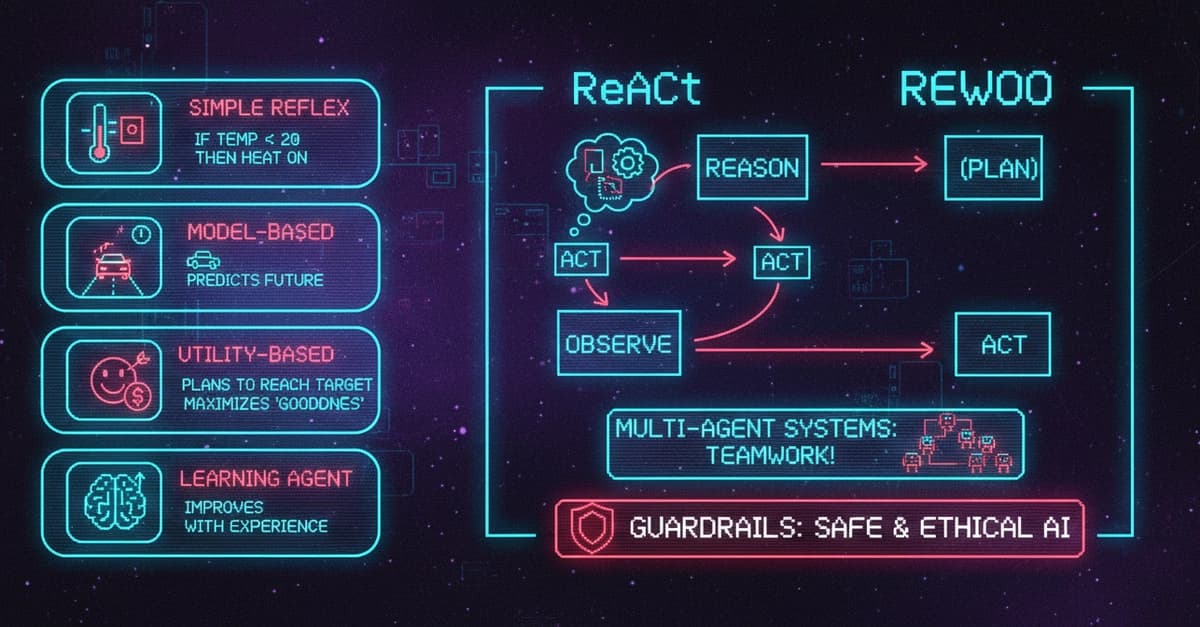
AI Agents Explained: 5 Types, Components, Frameworks, and Real-World Use Cases
Dev.to

Edge-to-Cloud Swarm Coordination for circular manufacturing supply chains with embodied agent feedback loops
Dev.to

Why QIS Is Not a Sync Problem: The Mailbox Model for Distributed Intelligence
Dev.to

The Ethics of AI: A Developer's Responsibility
Dev.to


