
Leveraging Weighted Syntactic and Semantic Context Assessment Summary (wSSAS) Towards Text Categorization Using LLMs
arXiv cs.AI / 4/15/2026
💬 OpinionIdeas & Deep AnalysisModels & Research
Key Points
- The paper argues that LLM-based text categorization can be unreliable in enterprise analytics due to stochastic attention and sensitivity to noisy data, which reduces precision and reproducibility.
- It proposes wSSAS, a deterministic two-phase validation approach that organizes text into a hierarchical Theme→Story→Cluster structure to improve data integrity.
- wSSAS introduces a Signal-to-Noise Ratio (SNR)–based scoring mechanism to prioritize high-value semantic features so the model’s attention focuses on representative data points.
- The method is integrated into a Summary-of-Summaries (SoS) architecture to isolate essential information and suppress irrelevant background noise during aggregation.
- Experiments using Gemini 2.0 Flash Lite on datasets like Google Business, Amazon Product, and Goodreads reviews show improved clustering integrity and categorization accuracy, including reduced entropy and better reproducibility.
Related Articles
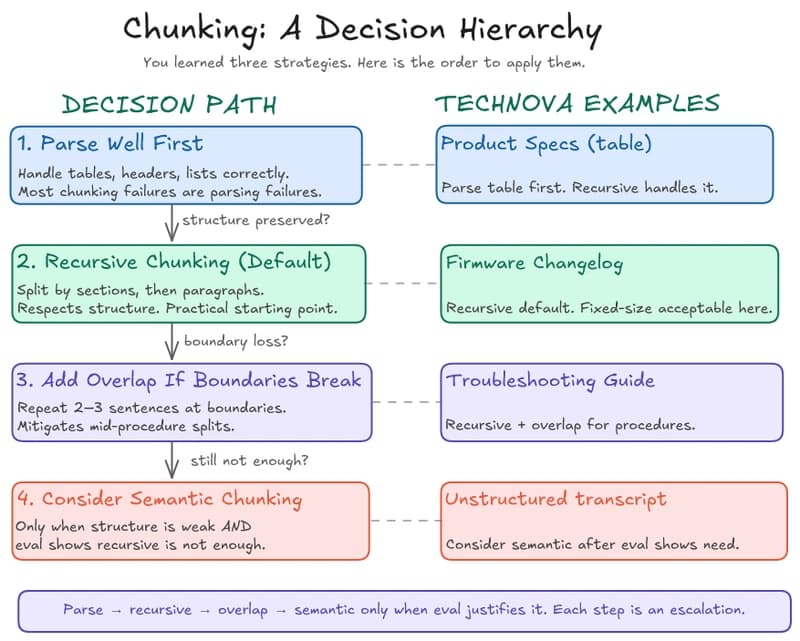
RAG in Practice — Part 4: Chunking, Retrieval, and the Decisions That Break RAG
Dev.to
Why dynamically routing multi-timescale advantages in PPO causes policy collapse (and a simple decoupled fix) [R]
Reddit r/MachineLearning

How AI Interview Assistants Are Changing Job Preparation in 2026
Dev.to

Consciousness in Artificial Intelligence: Insights from the Science ofConsciousness
Dev.to

NEW PROMPT INJECTION
Dev.to


