
Experiential Reflective Learning for Self-Improving LLM Agents
arXiv cs.AI / 3/27/2026
💬 OpinionSignals & Early TrendsIdeas & Deep AnalysisModels & Research
Key Points
- The paper introduces Experiential Reflective Learning (ERL), a self-improvement framework for LLM agents that adapts to specialized environments by extracting actionable lessons from past task experiences.
- ERL works by reflecting on task trajectories and outcomes to generate transferable heuristics, then retrieving the most relevant heuristics at test time and injecting them into the agent’s context to guide execution.
- On the Gaia2 benchmark, ERL raises success rate by 7.8% over a ReAct baseline, with the biggest improvements in task completion reliability.
- The study’s ablations show that selective retrieval is crucial for performance and that using heuristics provides more transferable abstractions than few-shot trajectory prompting.
- Overall, the authors argue that extracting heuristics from single-attempt experience enables effective agent self-improvement without re-learning from scratch each task.
広告
Related Articles

Got My 39-Agent System Audited Live. Here's What the Maturity Scorecard Revealed.
Dev.to

The Redline Economy
Dev.to

$500 GPU outperforms Claude Sonnet on coding benchmarks
Dev.to

From Scattershot to Sniper: AI for Hyper-Personalized Media Lists
Dev.to
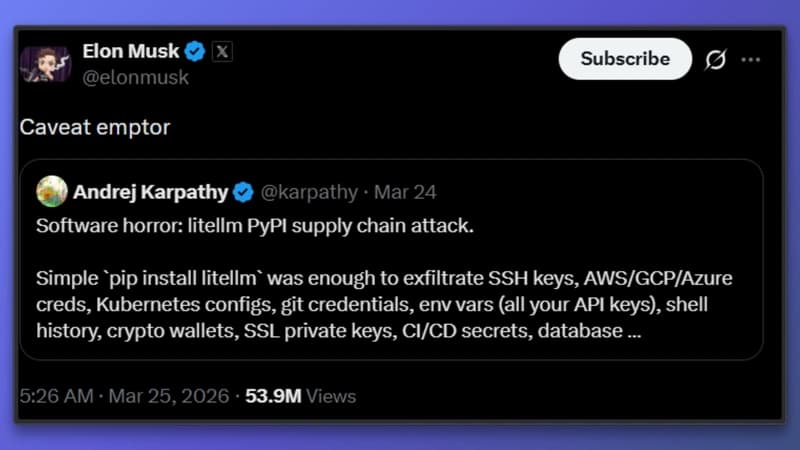
The LiteLLM Supply Chain Attack: A Wake-Up Call for AI Infrastructure
Dev.to


