
ContextLens: Modeling Imperfect Privacy and Safety Context for Legal Compliance
arXiv cs.CL / 4/15/2026
💬 OpinionIdeas & Deep AnalysisModels & Research
Key Points
- The paper introduces ContextLens, a semi-rule-based framework that uses LLMs to interpret imperfect, ambiguous legal/privacy/safety contexts for compliance purposes rather than assuming complete information.
- ContextLens grounds the input context in a legal domain by prompting LLMs with crafted questions covering applicability, general principles, and detailed legal provisions, while explicitly flagging known versus unknown factors.
- Experiments on GDPR and the EU AI Act compliance benchmarks show ContextLens can significantly improve LLM compliance assessments and outperform prior baselines without additional training.
- The approach also helps identify ambiguous or missing contextual factors that could affect compliance decisions in real-world scenarios.
Related Articles
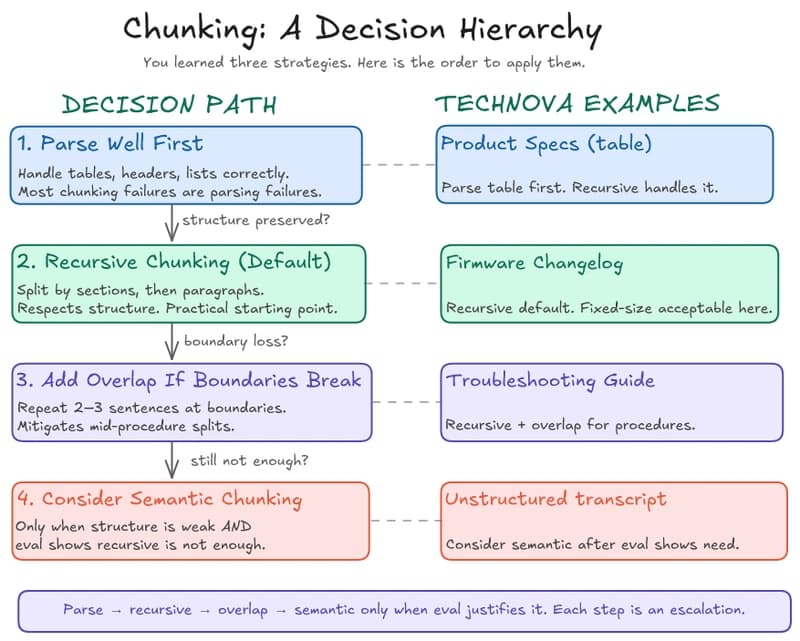
RAG in Practice — Part 4: Chunking, Retrieval, and the Decisions That Break RAG
Dev.to
Why dynamically routing multi-timescale advantages in PPO causes policy collapse (and a simple decoupled fix) [R]
Reddit r/MachineLearning

How AI Interview Assistants Are Changing Job Preparation in 2026
Dev.to

Consciousness in Artificial Intelligence: Insights from the Science ofConsciousness
Dev.to

NEW PROMPT INJECTION
Dev.to


