
The Multiverse of Time Series Machine Learning: an Archive for Multivariate Time Series Classification
arXiv cs.LG / 3/24/2026
📰 NewsIdeas & Deep AnalysisTools & Practical UsageModels & Research
Key Points
- The paper announces a major expansion of the existing UEA multivariate time-series classification benchmark archive, growing it from 30 classification datasets to 133, plus additional variants.
- It releases preprocessed versions that address common real-world issues such as missing values and unequal-length series, increasing the overall dataset count to 147.
- The archive is rebranded as the “Multiverse” repository to reflect its broader diversity of domains and to consolidate multiple existing collections into one unified source.
- To make experimentation feasible, the authors recommend a smaller “Multiverse-core (MV-core)” subset for initial exploration, alongside baseline evaluations and performance benchmarks.
- A dedicated repository is provided with an aeon and scikit-learn compatible framework, reproducibility support, an extensive record of published results, and an interactive interface for exploring benchmark outcomes.
Related Articles
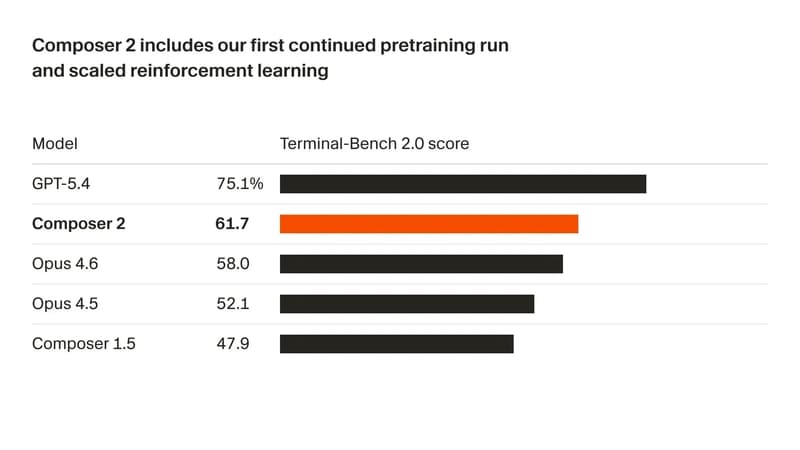
Composer 2: What is new and Compares with Claude Opus 4.6 & GPT-5.4
Dev.to
How UCP Breaks Your E-Commerce Tracking Stack: A Platform-by-Platform Analysis
Dev.to
AI Text Analyzer vs Asking Friends: Which Gives Better Perspective?
Dev.to
[D] Cathie wood claims ai productivity wave is starting, data shows 43% of ceos save 8+ hours weekly
Reddit r/MachineLearning

Microsoft hires top AI researchers from Allen Institute for AI for Suleyman's Superintelligence team
THE DECODER


