
LLM-Extracted Covariates for Clinical Causal Inference: Rethinking Integration Strategies
arXiv cs.LG / 4/21/2026
📰 NewsIdeas & Deep AnalysisModels & Research
Key Points
- The study addresses a key limitation of causal inference from EHRs—unmeasured confounding from clinically important states recorded in free text—and proposes using LLMs to extract those states as structured covariates.
- Using 21,859 sepsis patients from MIMIC-IV, the authors compare seven integration strategies for estimating the effect of early vasopressor initiation on 28-day mortality, including tabular baselines, traditional NLP features, and three LLM-augmented methods.
- The best-performing approach is to directly augment the propensity score model with LLM-derived covariates, while strategies like dual-caliper matching based on text-derived categorical distances can worsen results by shrinking the donor pool.
- In semi-synthetic experiments with known ground-truth effects, LLM-augmented propensity scores sharply reduce bias (from 0.0143 to 0.0003) versus tabular-only methods, and the improvement remains under substantial simulated extraction error.
- On real data, adding LLM-extracted covariates reduces the estimated treatment effect (0.055 to 0.027) in a way that aligns directionally with the CLOVERS randomized trial, and doubly robust estimation (0.019) further supports robustness.
Related Articles

Rethinking Coding Education for the AI Era
Dev.to

We Shipped an MVP With Vibe-Coding. Here's What Nobody Tells You About the Aftermath
Dev.to
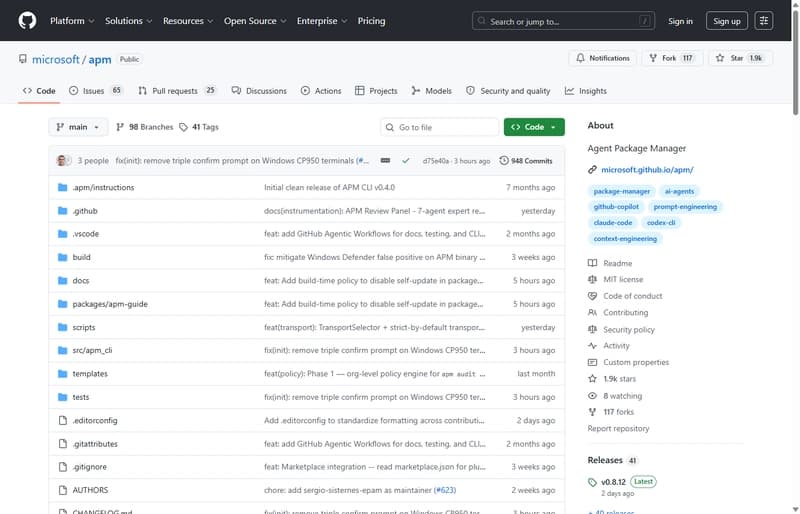
Agent Package Manager (APM): A DevOps Guide to Reproducible AI Agents
Dev.to

3 Things I Learned Benchmarking Claude, GPT-4o, and Gemini on Real Dev Work
Dev.to

Open Source Contributors Needed for Skillware & Rooms (AI/ML/Python)
Dev.to


