
KIRA: Knowledge-Intensive Image Retrieval and Reasoning Architecture for Specialized Visual Domains
arXiv cs.CV / 4/21/2026
📰 NewsDeveloper Stack & InfrastructureSignals & Early TrendsModels & Research
Key Points
- The paper introduces KIRA, a five-stage framework aimed at improving retrieval-augmented generation (RAG) for specialized visual domains by addressing key visual-RAG challenges like modality bridging, visual knowledge base construction, multi-hop reasoning, and evidence grounding.
- KIRA’s core components include hierarchical semantic chunking with DINO-based region detection, domain-adaptive contrastive encoders for rare concepts, dual-path cross-modal retrieval with chain-of-thought query expansion, and chain-of-retrieval for multi-hop reasoning with temporal/multiview support.
- For answer quality, KIRA uses evidence-conditioned grounded generation plus post-hoc hallucination verification to ensure responses are faithful to retrieved visual evidence.
- The authors propose DOMAINVQAR, a benchmark that evaluates visual RAG using retrieval precision, reasoning faithfulness, and domain correctness (not just recall), and report strong results across four specialized domains.
- Experiments on medical X-ray, circuit diagrams, satellite imagery, and histopathology show high retrieval precision (0.97) and grounding (1.0), with an average domain correctness of 0.707, and ablation studies highlight tradeoffs such as precision diversity impacts from components; code is planned for release after acceptance.
💡 Insights using this article
This article is featured in our daily AI news digest — key takeaways and action items at a glance.
Related Articles
A practical guide to getting comfortable with AI coding tools
Dev.to
Competitive Map: 10 AI Agent Platforms vs AgentHansa
Dev.to

Every time a new model comes out, the old one is obsolete of course
Reddit r/LocalLLaMA
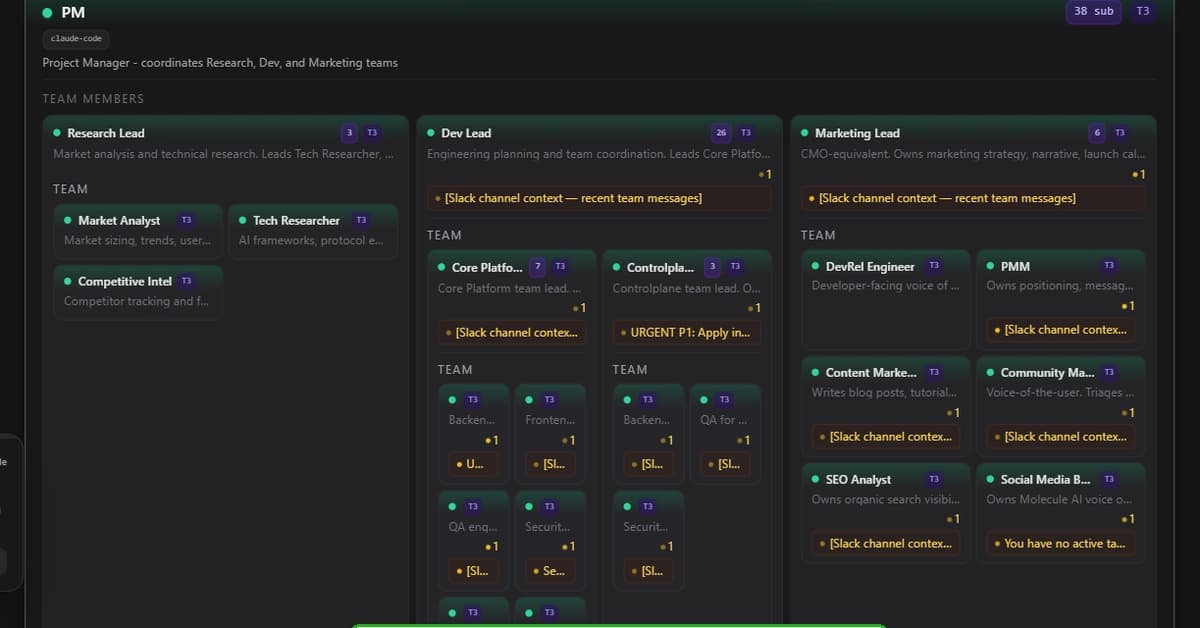
We built it during the NVIDIA DGX Spark Full-Stack AI Hackathon — and it ended up winning 1st place overall 🏆
Dev.to

Stop Losing Progress: Setting Up a Pro Jupyter Workflow in VS Code (No More Colab Timeouts!)
Dev.to


