
A Vision-Based Shared-Control Teleoperation Scheme for Controlling the Robotic Arm of a Four-Legged Robot
arXiv cs.RO / 5/6/2026
💬 OpinionDeveloper Stack & InfrastructureModels & Research
Key Points
- The paper addresses safe and efficient teleoperation of quadruped robots equipped with robotic arms in hazardous or remote environments where collision risk is high.
- It proposes an intuitive control scheme that maps the operator’s real wrist motion to the robot’s manipulator commands using a vision-based pose estimation pipeline with an external camera and ML model.
- A real-time trajectory planner is used to detect and prevent collisions with both external obstacles and the robot’s own arm during teleoperation.
- The approach is validated on a physical four-legged robot, showing robust performance for real-time remote control with reduced operator cognitive load.
- The authors position the method as a cost-effective solution for industrial settings that require safety, precision, and easier-than-joystick operation.
Related Articles

SIFS (SIFS Is Fast Search) - local code search for coding agents
Dev.to
BizNode's semantic memory (Qdrant) makes your bot smarter over time — it remembers past conversations and answers...
Dev.to
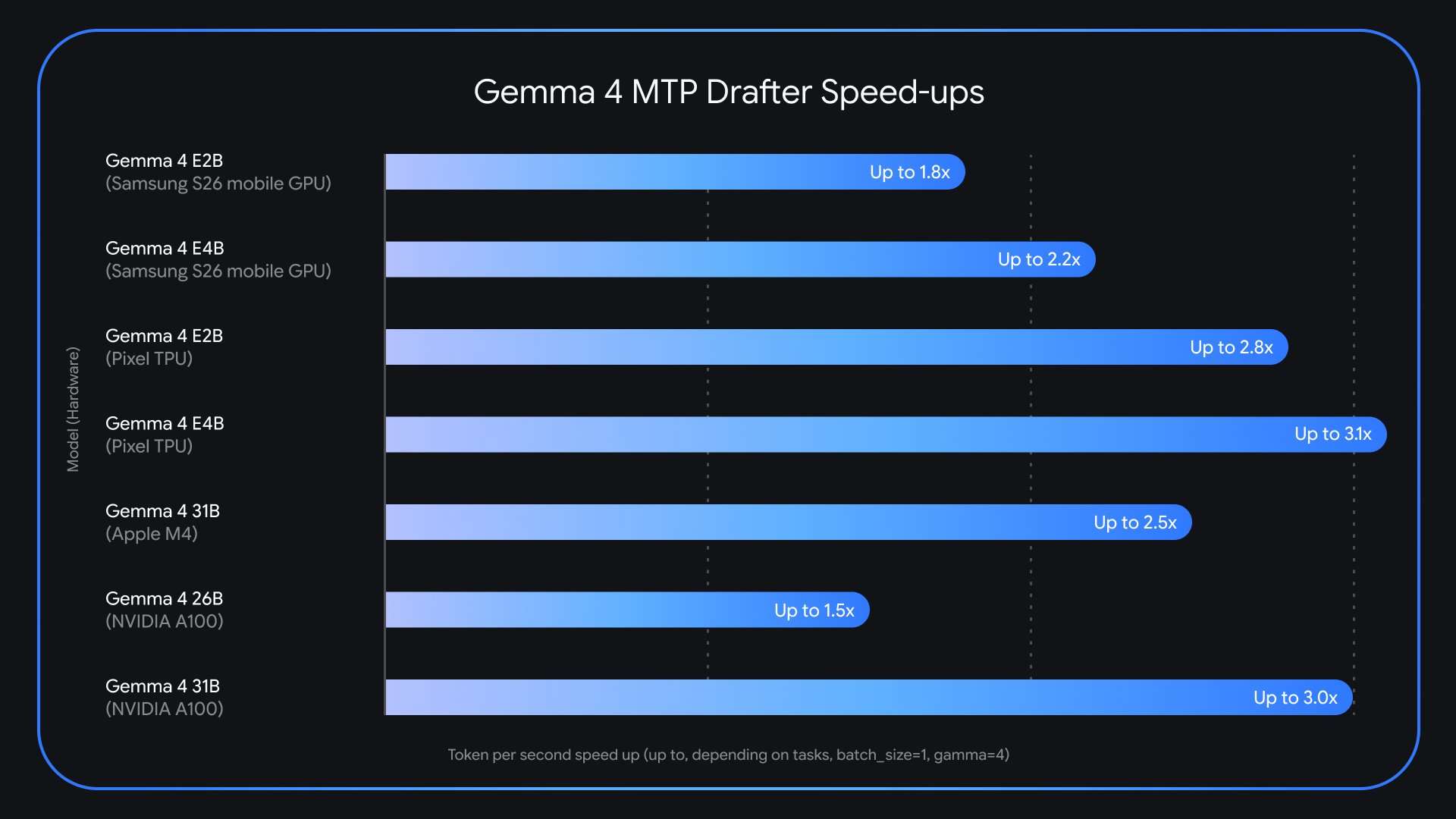
Google AI Releases Multi-Token Prediction (MTP) Drafters for Gemma 4: Delivering Up to 3x Faster Inference Without Quality Loss
MarkTechPost
Solidity LM surpasses Opus
Reddit r/LocalLLaMA

Quality comparison between Qwen 3.6 27B quantizations (BF16, Q8_0, Q6_K, Q5_K_XL, Q4_K_XL, IQ4_XS, IQ3_XXS,...)
Reddit r/LocalLLaMA


