
Minimum-Action Learning: Energy-Constrained Symbolic Model Selection for Physical Law Identification from Noisy Data
arXiv cs.LG / 3/19/2026
📰 NewsIdeas & Deep AnalysisModels & Research
Key Points
- Minimum-Action Learning (MAL) identifies physical laws by selecting symbolic force laws from a predefined basis library using a Triple-Action objective that combines trajectory reconstruction, architectural sparsity, and energy-conservation enforcement.
- A wide-stencil acceleration-matching technique reduces noise variance by about 10,000x, transforming a very low SNR setting into a learnable problem and enabling robust recovery across methods, including SINDy variants.
- On Kepler gravity and Hooke's law benchmarks, MAL recovers the correct force law with a Kepler exponent p = 3.01 ± 0.01 and a low energy cost around 0.07 kWh, achieving a 40% reduction versus baselines that rely only on prediction error.
- The raw correct-basis rates are 40% for Kepler and 90% for Hooke, and an energy-conservation criterion yields 100% pipeline-level identification, demonstrating the effectiveness of the conservation diagnostic.
- The paper also shows the method's robustness to basis library choices, with near-confounders degrading performance and distant additions being harmless, while MAL's energy constraint and dynamical rollout validation differentiate it from SINDy, Hamiltonian Neural Networks, and Lagrangian Neural Networks.
Related Articles
Day 10: 230 Sessions of Hustle and It Comes Down to One Person Reading a Document
Dev.to

5 Dangerous Lies Behind Viral AI Coding Demos That Break in Production
Dev.to
Two bots, one confused server: what Nimbus revealed about AI agent identity
Dev.to
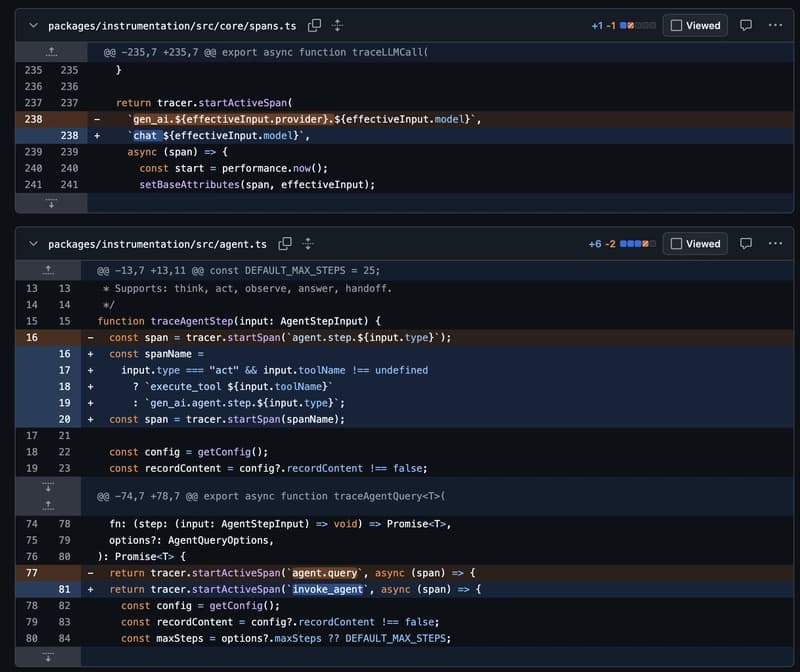
OpenTelemetry just standardized LLM tracing. Here's what it actually looks like in code.
Dev.to
PIXIU: A Large Language Model, Instruction Data and Evaluation Benchmark forFinance
Dev.to


