
K-SENSE: A Knowledge-Guided Self-Augmented Encoder for Neuro-Semantic Evaluation of Mental Health Conditions on Social Media
arXiv cs.CL / 4/28/2026
📰 NewsIdeas & Deep AnalysisModels & Research
Key Points
- The article proposes K-SENSE, a unified framework for neuro-semantic evaluation of mental health conditions from social media text, aimed at improving stress and depression detection despite figurative and implicit language.
- K-SENSE combines external commonsense/psychological reasoning (via COMET across five mental-state dimensions) with robustness techniques (a three-stage encoding pipeline and supervised contrastive learning).
- It uses a dual-stream encoder to build a “semantic anchor” by projecting and fusing hidden representations into a shared space, while the training objective aligns same-class examples and suppresses irrelevant knowledge noise.
- Experiments on Dreaddit (stress) and Depression_Mixed (depression) show mean F1 scores of 86.1 and 94.3, improving roughly 2.6 and 1.5 percentage points over the best prior baselines.
- Ablation studies indicate that individual components—such as the temporal knowledge integration strategy and freezing the knowledge encoder during fine-tuning—each contribute to the overall performance gains.
Related Articles

Big Tech firms are accelerating AI investments and integration, while regulators and companies focus on safety and responsible adoption.
Dev.to
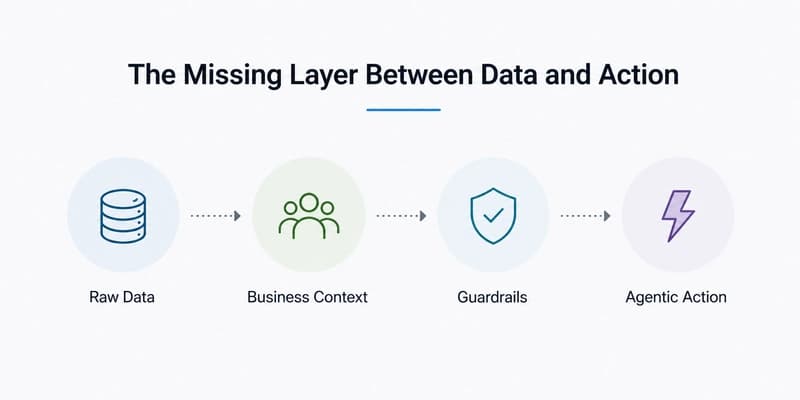
Everyone Wants AI Agents. Fewer Teams Are Ready for the Messy Business Context Behind Them
Dev.to
AI 编程工具对比 2026:Claude Code vs Cursor vs Gemini CLI vs Codex
Dev.to

How I Improved My YouTube Shorts and Podcast Audio Workflow with AI Tools
Dev.to

An improvement of the convergence proof of the ADAM-Optimizer
Dev.to


