
Diversity-Aware Reverse Kullback-Leibler Divergence for Large Language Model Distillation
arXiv cs.AI / 4/2/2026
💬 OpinionIdeas & Deep AnalysisModels & Research
Key Points
- The paper analyzes why Reverse Kullback-Leibler (RKL) divergence is effective for LLM distillation, showing it typically outperforms forward KL (FKL) by emphasizing dominant modes under vocabulary size and capacity mismatch.
- It identifies a structural drawback of RKL: non-target gradients can increase target logits even when the student already matches the teacher, which reduces output diversity and can make the student overly confident.
- The authors show RKL also provides weak supervision for non-target classes, leading to poor alignment for tail (less likely) categories.
- To fix these issues, they introduce Diversity-aware RKL (DRKL), which removes the problematic gradient behavior and improves non-target supervision while retaining RKL’s optimization advantages.
- Experiments across multiple datasets and model families indicate DRKL consistently beats FKL, RKL, and other distillation objectives, improving the fidelity–diversity trade-off.
Related Articles
v5.5.0
Transformers(HuggingFace)Releases
Bonsai (PrismML's 1 bit version of Qwen3 8B 4B 1.7B) was not an aprils fools joke
Reddit r/LocalLLaMA

Big Tech firms are accelerating AI investments and integration, while regulators and companies focus on safety and responsible adoption.
Dev.to
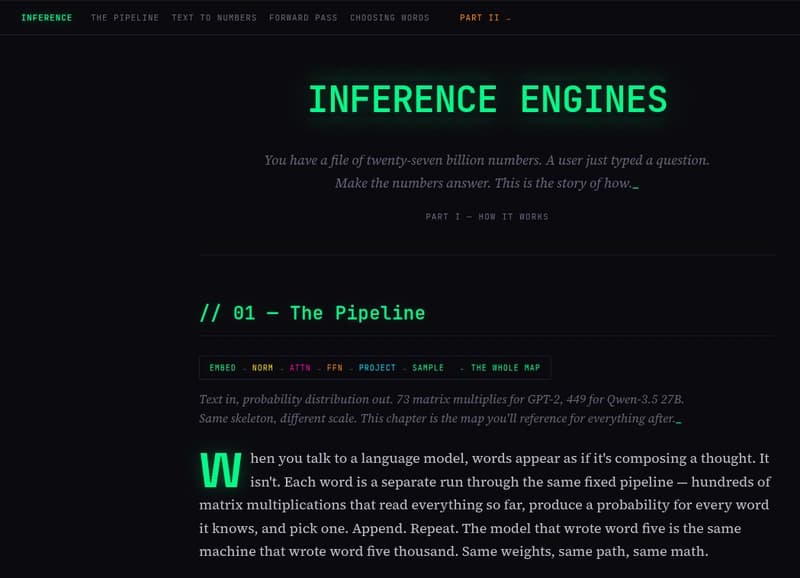
Inference Engines - A visual deep dive into the layers of an LLM
Dev.to
Surprised by how capable Qwen3.5 9B is in agentic flows (CodeMode)
Reddit r/LocalLLaMA


