
Quantifying the human visual exposome with vision language models
arXiv cs.CV / 5/6/2026
💬 OpinionIdeas & Deep AnalysisModels & Research
Key Points
- The study tackles the lack of direct, objective quantification of the visual environment’s role in mental health by moving beyond coarse location proxies and self-reports.
- It combines ecological momentary assessment with vision-language models (VLMs) to estimate the semantic “richness” of daily visual experience from participant photos.
- Using 2,674 participant-generated photographs, the VLM-derived greenness estimates robustly predicted both momentary affect and chronic stress, aligning with existing benchmarks.
- The authors build a semi-autonomous LLM-driven pipeline that mines over seven million scientific publications to extract nearly 1,000 environment-related features linked to mental health.
- On real-world imagery, VLM-derived context ratings showed significant correlations with affect and stress for up to 33% of the extracted contextual signals, supporting scalable visual exposomics.
Related Articles

Top 10 Free AI Tools for Students in 2026: The Ultimate Study Guide
Dev.to

AI as Your Contingency Co-Pilot: Automating Wedding Day 'What-Ifs'
Dev.to
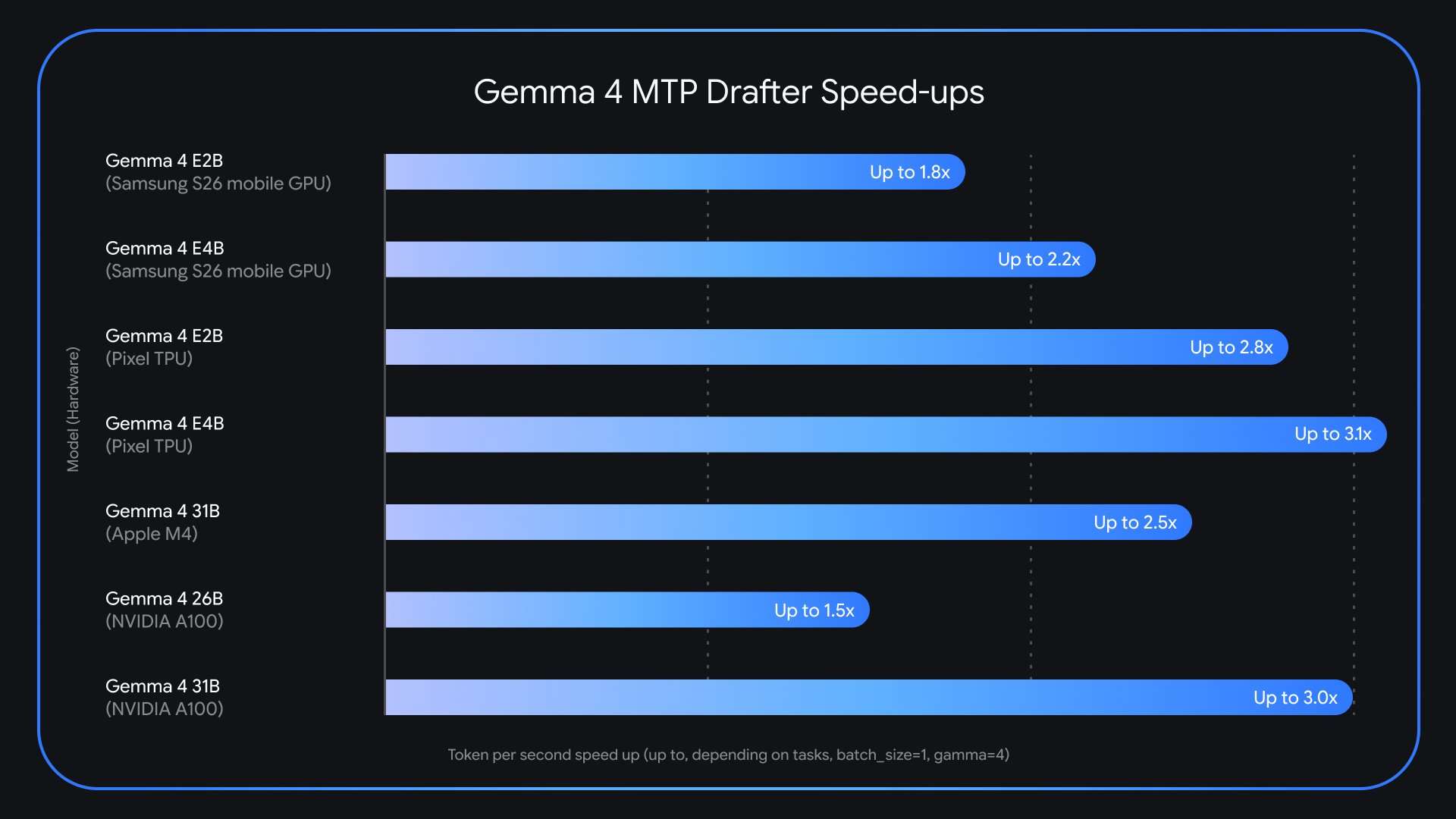
Google AI Releases Multi-Token Prediction (MTP) Drafters for Gemma 4: Delivering Up to 3x Faster Inference Without Quality Loss
MarkTechPost
When Claude Hallucinates in Court: The Latham & Watkins Incident and What It Means for Attorney Liability
MarkTechPost
Solidity LM surpasses Opus
Reddit r/LocalLLaMA


