
MCMC-Correction of Score-Based Diffusion Models for Model Composition
arXiv stat.ML / 4/2/2026
💬 OpinionIdeas & Deep AnalysisModels & Research
Key Points
- The paper studies how diffusion models can be sampled using either energy-based parameterizations (enabling Metropolis–Hastings corrections) or score-based parameterizations (which typically lack an explicit energy function).
- It proposes an MCMC-correction approach for score-based diffusion models by introducing an MH-like acceptance rule derived from line integration of the score function, avoiding the need for explicit energy modeling.
- The method is framed as an instance of annealed MCMC that allows composing pre-trained score-based diffusion models to sample from new target distributions.
- Experiments on both synthetic and real-world datasets show relative sampling improvements comparable in magnitude to those achieved by energy-based models, while retaining the ability to reuse existing score-model ecosystems.
Related Articles
v5.5.0
Transformers(HuggingFace)Releases
Bonsai (PrismML's 1 bit version of Qwen3 8B 4B 1.7B) was not an aprils fools joke
Reddit r/LocalLLaMA

Big Tech firms are accelerating AI investments and integration, while regulators and companies focus on safety and responsible adoption.
Dev.to
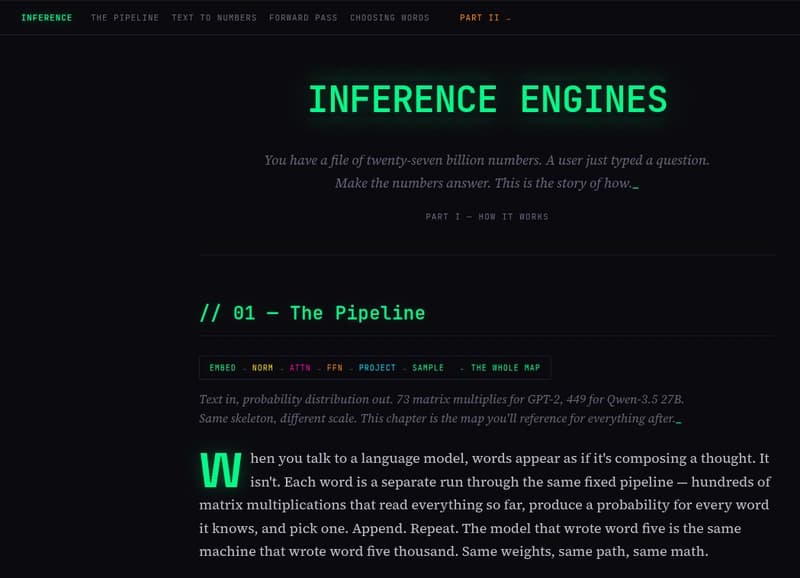
Inference Engines - A visual deep dive into the layers of an LLM
Dev.to
Surprised by how capable Qwen3.5 9B is in agentic flows (CodeMode)
Reddit r/LocalLLaMA


