
LLM-ADAM: A Generalizable LLM Agent Framework for Pre-Print Anomaly Detection in Additive Manufacturing
arXiv cs.LG / 5/6/2026
📰 NewsDeveloper Stack & InfrastructureIdeas & Deep AnalysisModels & Research
Key Points
- The paper introduces LLM-ADAM, an LLM-based framework designed to detect anomalies in additive manufacturing (especially FFF) before printing by screening G-code for harmful or suspect settings.
- LLM-ADAM separates the problem into three components—Extractor-LLM for mapping G-code to a structured parameter schema, Reference-LLM for aligning printer/material documentation to valid operating ranges, and Judge-LLM for classifying defects using deviation tables and G-code evidence.
- The framework is presented as generalizable: printer models, materials, and even LLM backbones are treated as interchangeable rather than fixed assumptions.
- In experiments on 200 FFF G-code samples across two printer families, two materials, and five defect categories (plus non-defective parts), the best configuration achieves 87.5% accuracy versus 59.5% for the strongest single-LLM engineered baseline.
- The authors conclude that the structured task decomposition drives most of the performance gains, with leading setups identifying defect classes at near “ceiling” levels and remaining errors skewing toward conservative false alarms for non-defective prints.
Related Articles

Top 10 Free AI Tools for Students in 2026: The Ultimate Study Guide
Dev.to

SIFS (SIFS Is Fast Search) - local code search for coding agents
Dev.to

AI as Your Contingency Co-Pilot: Automating Wedding Day 'What-Ifs'
Dev.to

BizNode's semantic memory (Qdrant) makes your bot smarter over time — it remembers past conversations and answers...
Dev.to
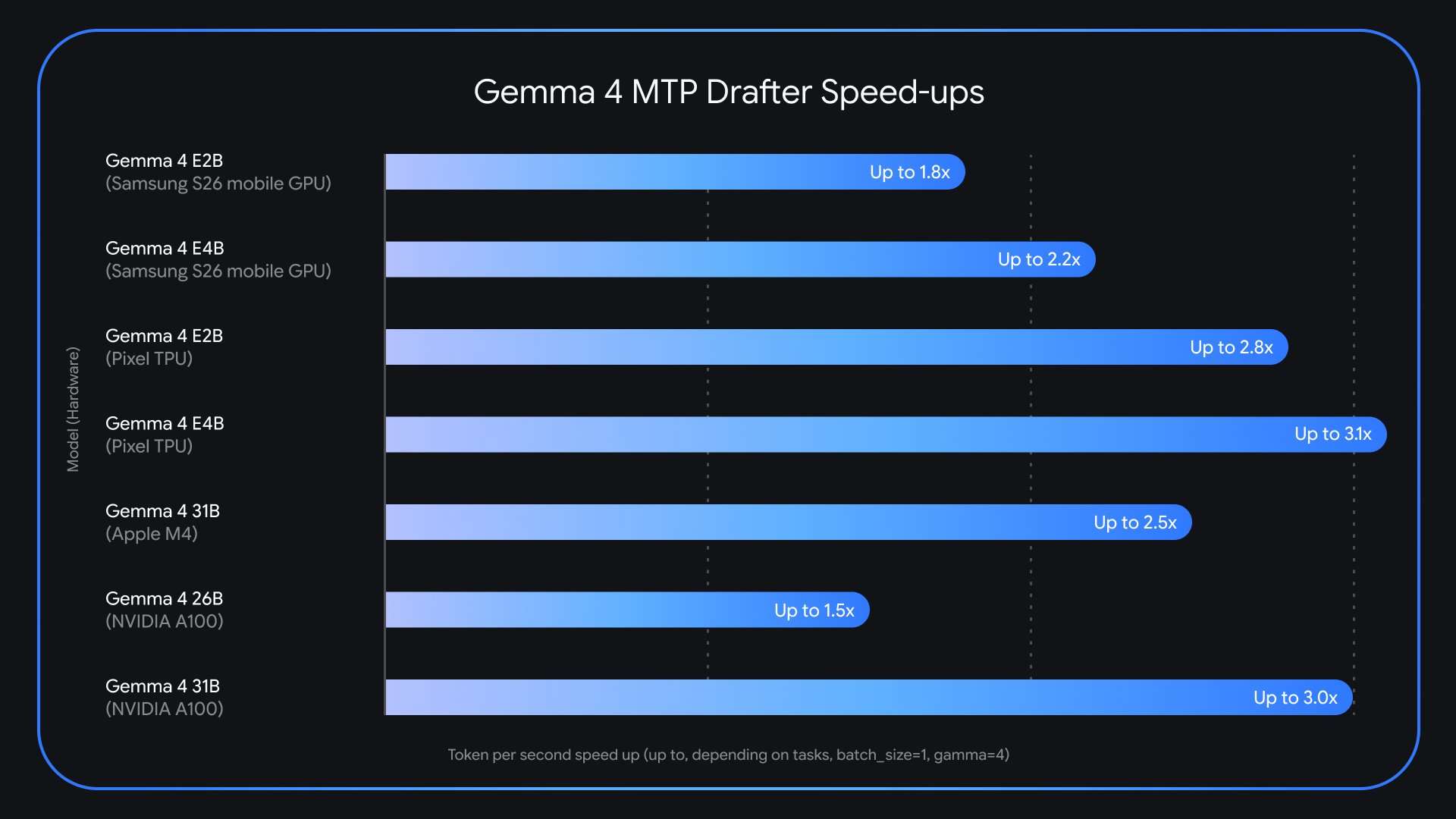
Google AI Releases Multi-Token Prediction (MTP) Drafters for Gemma 4: Delivering Up to 3x Faster Inference Without Quality Loss
MarkTechPost


