
Interpretable Human Activity Recognition for Subtle Robbery Detection in Surveillance Videos
arXiv cs.CV / 4/17/2026
📰 NewsDeveloper Stack & InfrastructureSignals & Early TrendsModels & Research
Key Points
- The paper addresses the challenge of automatically detecting brief, subtle non-violent snatch-and-run robberies that are often visually similar to normal interactions in uncontrolled surveillance videos.
- It proposes a hybrid, pose-driven pipeline that uses a YOLO-based pose estimator to extract body keypoints and then computes interpretable kinematic and interaction features (e.g., hand speed, arm extension, proximity, relative motion) for an aggressor–victim pair.
- A Random Forest classifier is trained on these pose-derived descriptors, and a temporal hysteresis filter is applied to smooth predictions and reduce false alarms at the frame level.
- Experiments on both a staged dataset and a disjoint internet-video test set show promising generalization across scenes and camera viewpoints.
- The authors deploy the full system on an NVIDIA Jetson Nano and report real-time performance, indicating on-device feasibility for proactive robbery detection.
- The work’s interpretability focus (feature-level, pose-based reasoning) is intended to make model decisions more explainable than purely black-box video classifiers, supporting practical surveillance use.
Related Articles

Reported ban on ‘sex robots’ by online platform fuels debate on AI boundaries and content moderation
Reddit r/artificial
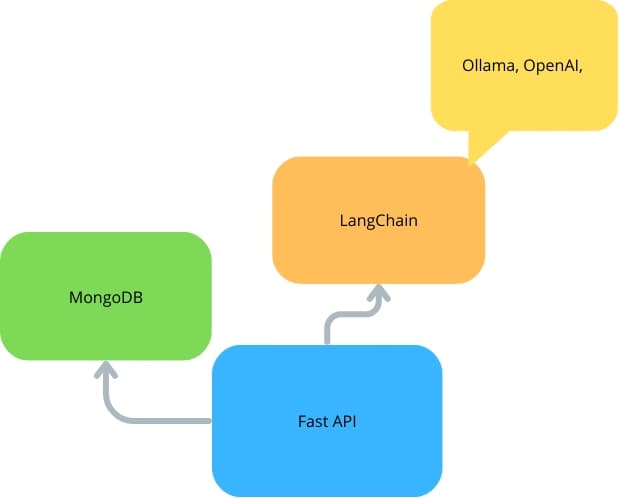
FastAPI With LangChain and MongoDB
Dev.to
Best AI Game Creator in 2026
Dev.to
![[Patterns] AI Agent Error Handling That Actually Works](/_next/image?url=https%3A%2F%2Fmedia2.dev.to%2Fdynamic%2Fimage%2Fwidth%3D1200%2Cheight%3D627%2Cfit%3Dcover%2Cgravity%3Dauto%2Cformat%3Dauto%2Fhttps%253A%252F%252Fdev-to-uploads.s3.amazonaws.com%252Fuploads%252Farticles%252Frn5czaopq2vzo7cglady.png&w=3840&q=75)
[Patterns] AI Agent Error Handling That Actually Works
Dev.to
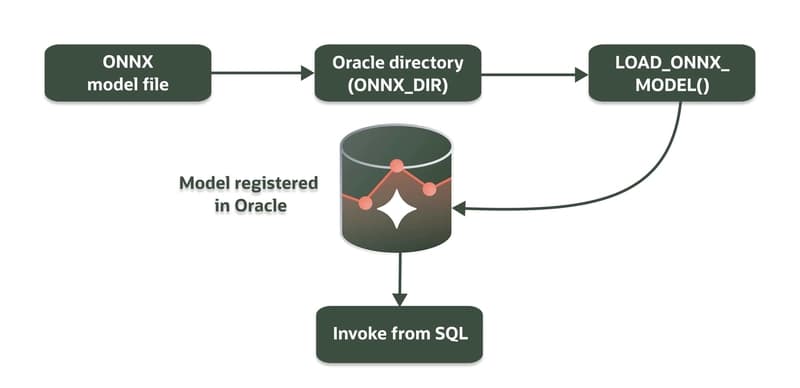
Building ONNX Embedding Workflows in Oracle AI Database with Python
Dev.to


