
Efficient Personalization of Generative User Interfaces
arXiv cs.LG / 4/14/2026
💬 OpinionSignals & Early TrendsIdeas & Deep AnalysisModels & Research
Key Points
- The paper examines why personalizing generative user interfaces is difficult, noting that UI preferences are subjective, costly to infer from sparse feedback, and hard to specify as explicit rules.
- It introduces a new dataset built from 20 trained designers who provide pairwise judgments over the same 600 generated UIs, revealing substantial preference disagreement across designers (average kappa = 0.25).
- Analysis of designers’ written rationales shows that even when they use similar high-level concepts (e.g., hierarchy or cleanliness), they differ in definitions, prioritization, and how those concepts are applied.
- To address these challenges, the authors propose a sample-efficient personalization method that represents a new user through prior designers (preference priors) rather than a fixed rubric of design concepts.
- In evaluations, the preference model beats a pretrained UI evaluator and a larger multimodal model, scales better with more feedback, and when applied to generation produces interfaces preferred by 12 new designers versus baseline and direct prompting approaches.
Related Articles

Black Hat Asia
AI Business

The Complete Guide to Better Meeting Productivity with AI Note-Taking
Dev.to

5 Ways Real-Time AI Can Boost Your Sales Call Performance
Dev.to
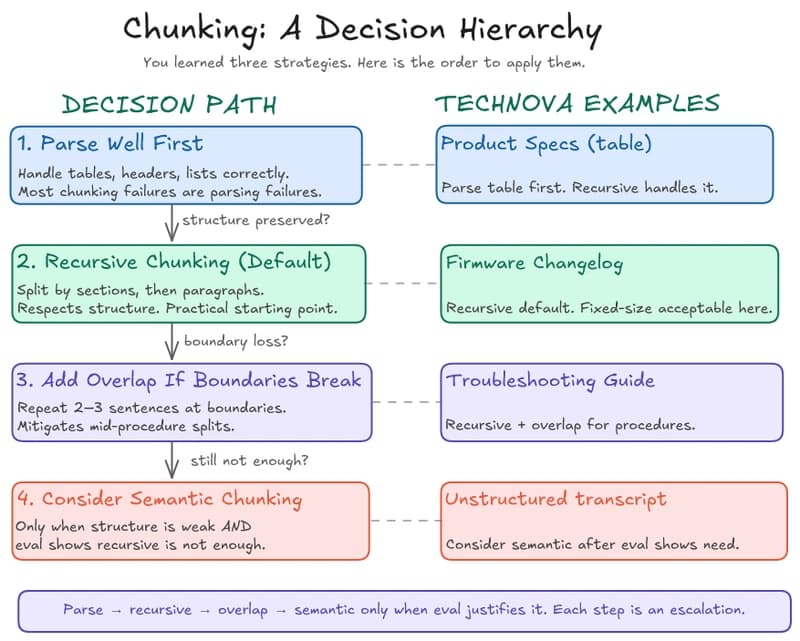
RAG in Practice — Part 4: Chunking, Retrieval, and the Decisions That Break RAG
Dev.to
Why dynamically routing multi-timescale advantages in PPO causes policy collapse (and a simple decoupled fix) [R]
Reddit r/MachineLearning


