
The Courtroom Trial of Pixels: Robust Image Manipulation Localization via Adversarial Evidence and Reinforcement Learning Judgment
arXiv cs.CV / 4/17/2026
📰 NewsModels & Research
Key Points
- The paper argues that many image manipulation localization (IML) approaches treat authenticity-related supervision only as an auxiliary training signal, failing to explicitly model “evidence” that contrasts manipulated vs. authentic regions.
- It proposes a courtroom-style adjudication framework with three components—a prosecution stream, a defense stream, and a judge model—that performs evidence confrontation for manipulation and authenticity using a dual-hypothesis segmentation architecture.
- The prosecution and defense streams generate evidence through cascaded multi-level fusion, bidirectional disagreement suppression, and dynamic debate refinement, guided by edge priors to better handle subtle or degraded traces.
- A reinforcement learning–based judge model strategically re-infers and refines uncertain areas, producing a final manipulated-region mask, with training using advantage-based rewards and a soft-IoU objective.
- Experiments on image datasets show improved average performance over state-of-the-art IML methods, with reliability calibration based on entropy and cross-hypothesis consistency.
Related Articles
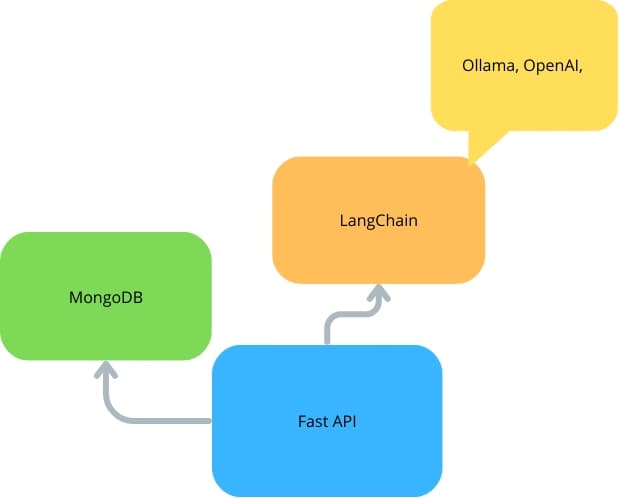
FastAPI With LangChain and MongoDB
Dev.to
![[2026] OpenTelemetry for LLM Observability — Self-Hosted Setup](/_next/image?url=https%3A%2F%2Fmedia2.dev.to%2Fdynamic%2Fimage%2Fwidth%3D1200%2Cheight%3D627%2Cfit%3Dcover%2Cgravity%3Dauto%2Cformat%3Dauto%2Fhttps%253A%252F%252Fdev-to-uploads.s3.amazonaws.com%252Fuploads%252Farticles%252Flu4b6ttuhur71z5gemm0.png&w=3840&q=75)
[2026] OpenTelemetry for LLM Observability — Self-Hosted Setup
Dev.to
The AI Education Product on Product Hunt Worth Watching
Dev.to

The joy and pain of training an LLM from scratch
Reddit r/LocalLLaMA

Did you know that you can use Qwen3.5-35B-A3B-Base as an instruction/reasoning Model?
Reddit r/LocalLLaMA


