
Resource-Lean Lexicon Induction for German Dialects
arXiv cs.CL / 4/28/2026
📰 NewsIdeas & Deep AnalysisModels & Research
Key Points
- The paper addresses the challenge of automatically inducing high-quality lexical dictionaries for German dialects despite limited annotations and high spelling variation.
- It shows that random-forest statistical models using string-similarity features can effectively induce German dialect lexicons and can outperform LLM baselines like Mistral-123b.
- The induced dictionaries support cross-dialect transfer and are evaluated under different training-data sizes to study robustness in low-resource settings.
- In bilingual lexicon induction (BLI), random forests achieve stronger intrinsic performance while remaining more resource-lean than large language models.
- In dialect information retrieval (IR) with BM25, the paper reports query expansion using the dialect dictionaries improves results by up to 28.9% in nDCG@10 and 50.7% in Recall@100.
Related Articles

Big Tech firms are accelerating AI investments and integration, while regulators and companies focus on safety and responsible adoption.
Dev.to
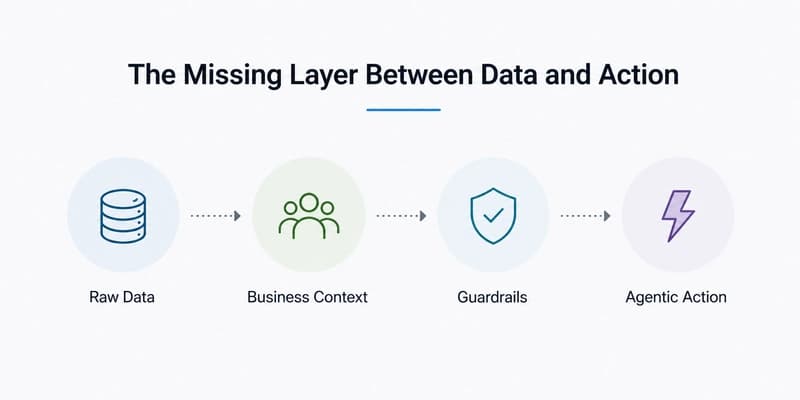
Everyone Wants AI Agents. Fewer Teams Are Ready for the Messy Business Context Behind Them
Dev.to
AI 编程工具对比 2026:Claude Code vs Cursor vs Gemini CLI vs Codex
Dev.to

How I Improved My YouTube Shorts and Podcast Audio Workflow with AI Tools
Dev.to

An improvement of the convergence proof of the ADAM-Optimizer
Dev.to


