
Polish phonology and morphology through the lens of distributional semantics
arXiv cs.CL / 4/3/2026
💬 OpinionSignals & Early TrendsIdeas & Deep AnalysisModels & Research
Key Points
- The paper uses distributional semantics to test whether Polish phonological and morphonological structure is mirrored in semantic embedding space, focusing on consonant clusters and complex word forms.
- Experiments with techniques like t-SNE, Linear Discriminant Analysis, and discriminative learning show that embeddings encode not only morphosyntactic features (case, gender, number, tense, aspect) but also sub-lexical information such as phoneme-string patterns.
- The study reports that phonotactic complexity, morphotactic transparency, and available morphosyntactic categories can be predicted from embeddings without explicitly using the surface forms.
- It argues that a discriminative lexicon model built on embeddings can support highly accurate predictions for comprehension and production, due to strong structural correspondences between semantic and form spaces.
Related Articles

Black Hat Asia
AI Business

90000 Tech Workers Got Fired This Year and Everyone Is Blaming AI but Thats Not the Whole Story
Dev.to

Microsoft’s $10 Billion Japan Bet Shows the Next AI Battleground Is National Infrastructure
Dev.to
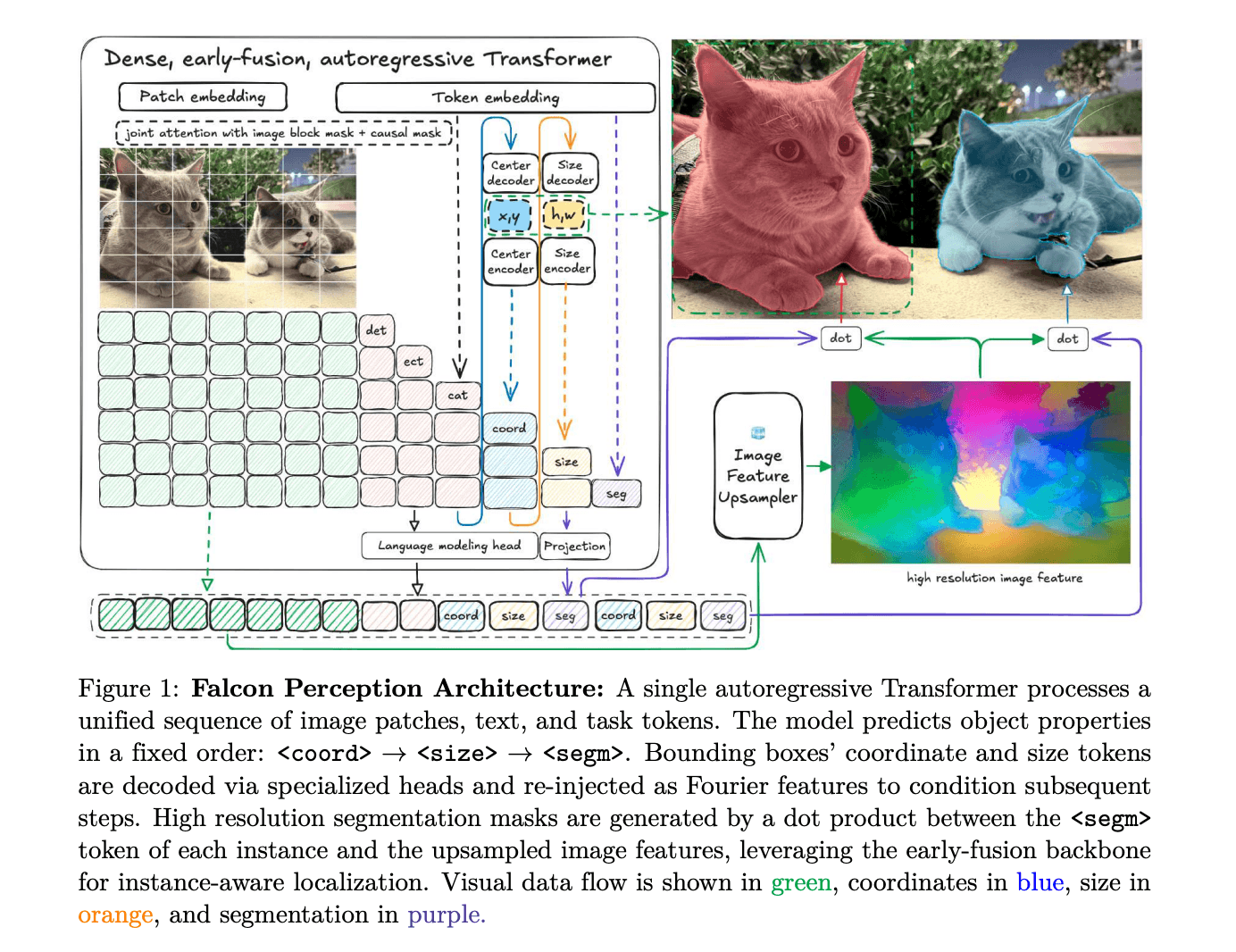
TII Releases Falcon Perception: A 0.6B-Parameter Early-Fusion Transformer for Open-Vocabulary Grounding and Segmentation from Natural Language Prompts
MarkTechPost

Portable eye scanner powered by AI expands access to low-cost community screening
Reddit r/artificial


