
Boundary-Aware Uncertainty Quantification for Wildfire Spread Prediction
arXiv cs.CV / 5/6/2026
📰 NewsIdeas & Deep AnalysisModels & Research
Key Points
- The paper highlights that deep learning wildfire spread predictors often lack principled uncertainty quantification (UQ), limiting risk-aware emergency planning.
- It argues that global evaluation metrics are insufficient for boundary-sensitive scenarios like wildfire spread, motivating a more operationally relevant assessment method.
- The authors introduce the Fire-Centered Evaluation Region (FCER) framework, a spatially conditioned protocol to evaluate UQ specifically within critical fire zones.
- Using the WildfireSpreadTS dataset, they compare an ensemble model with a distilled single-pass student model and find the student achieves comparable calibration and useful uncertainty ranking in boundary-relevant regimes.
- The work provides open code via GitHub, enabling others to reproduce and build on the FCER evaluation approach and model comparison.
Related Articles

Top 10 Free AI Tools for Students in 2026: The Ultimate Study Guide
Dev.to
AI as Your Contingency Co-Pilot: Automating Wedding Day 'What-Ifs'
Dev.to
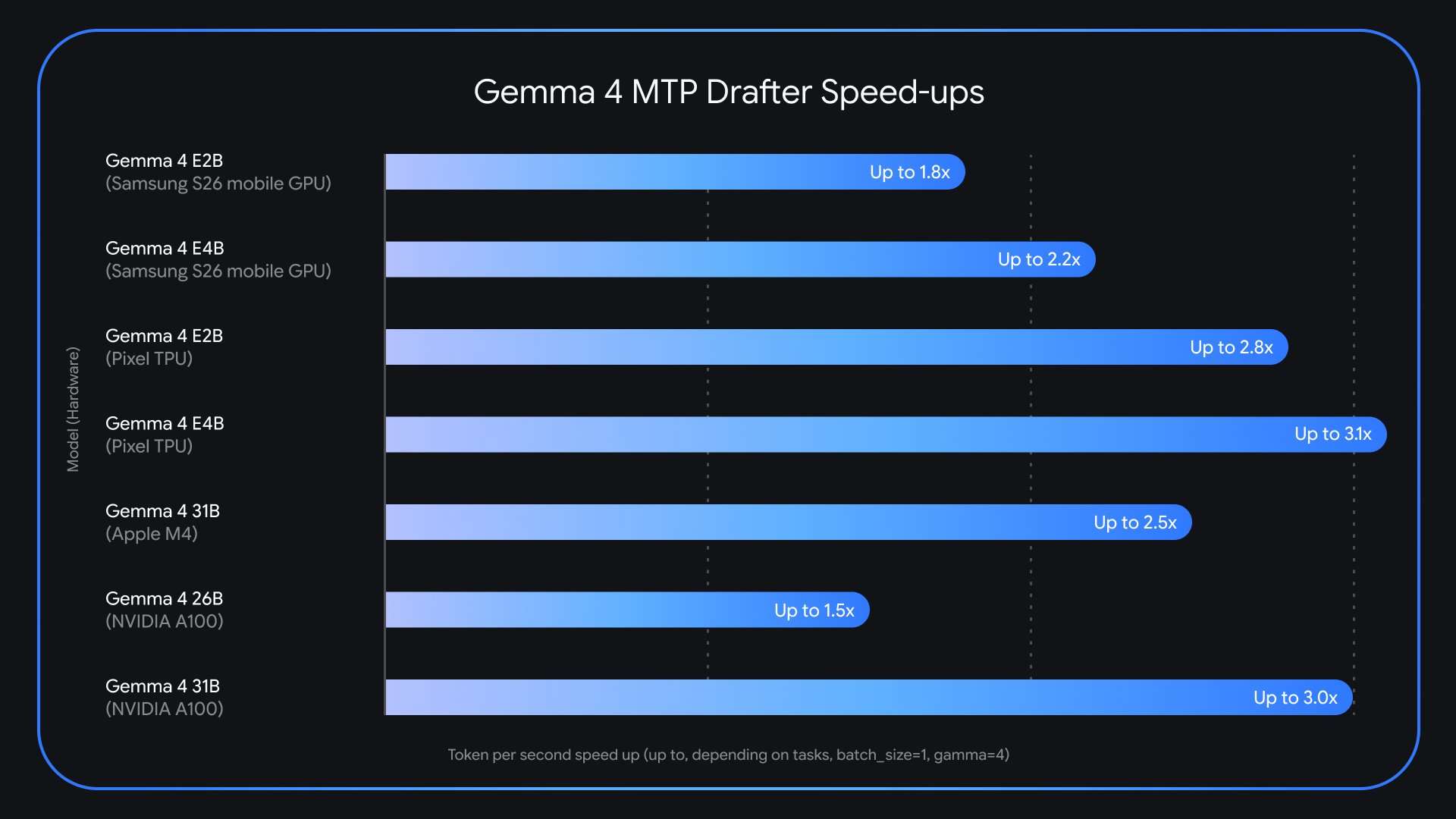
Google AI Releases Multi-Token Prediction (MTP) Drafters for Gemma 4: Delivering Up to 3x Faster Inference Without Quality Loss
MarkTechPost
When Claude Hallucinates in Court: The Latham & Watkins Incident and What It Means for Attorney Liability
MarkTechPost
Solidity LM surpasses Opus
Reddit r/LocalLLaMA


