
Bridging the Embodiment Gap: Disentangled Cross-Embodiment Video Editing
arXiv cs.RO / 5/6/2026
📰 NewsDeveloper Stack & InfrastructureModels & Research
Key Points
- The paper tackles a key robotics challenge: learning manipulation from human videos while overcoming distribution shift between human and robot embodiments.
- It proposes disentangled cross-embodiment video editing by factorizing a demonstration into two independent latent spaces—one for task information and one for embodiment/kinematics—using a dual contrastive objective.
- A parameter-efficient adapter injects the learned latent codes into a frozen video diffusion model to generate coherent robot execution videos from a single human demonstration.
- The method is designed to avoid the need for paired cross-embodiment training data (human–robot aligned examples).
- Experiments report improved temporal consistency and morphological accuracy in the generated robot demonstrations, positioning the approach as scalable for leveraging large-scale human video data for robot learning.
Related Articles

SIFS (SIFS Is Fast Search) - local code search for coding agents
Dev.to
BizNode's semantic memory (Qdrant) makes your bot smarter over time — it remembers past conversations and answers...
Dev.to
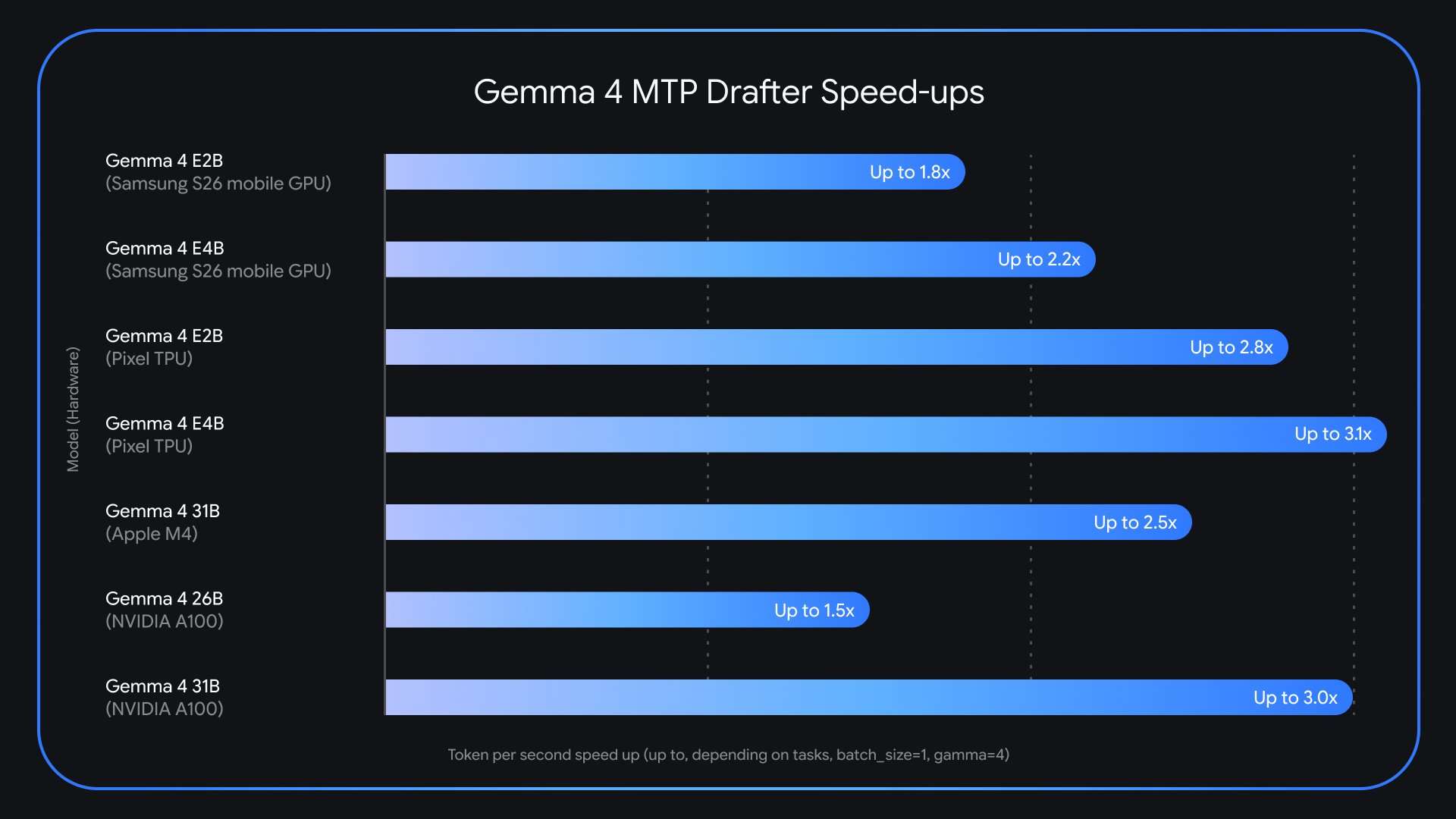
Google AI Releases Multi-Token Prediction (MTP) Drafters for Gemma 4: Delivering Up to 3x Faster Inference Without Quality Loss
MarkTechPost
Solidity LM surpasses Opus
Reddit r/LocalLLaMA

Quality comparison between Qwen 3.6 27B quantizations (BF16, Q8_0, Q6_K, Q5_K_XL, Q4_K_XL, IQ4_XS, IQ3_XXS,...)
Reddit r/LocalLLaMA


