
From Causal Discovery to Dynamic Causal Inference in Neural Time Series
arXiv cs.LG / 3/24/2026
💬 OpinionIdeas & Deep AnalysisModels & Research
Key Points
- The paper argues that dynamic causal inference is often limited by the unrealistic assumption that the underlying time-varying causal network is known in advance, motivating methods for uncertain and evolving causal structure.
- It introduces DCNAR, a two-stage neural framework where a neural autoregressive causal discovery model first learns a sparse directed causal graph from multivariate time series.
- In the second stage, the learned graph is used as a structural prior for a time-varying neural network autoregression to estimate changing causal influences without requiring pre-specified network structure.
- The authors evaluate DCNAR using behavioral diagnostics (causal necessity, temporal stability, and sensitivity to structural change) rather than relying only on forecasting accuracy.
- Experiments on multi-country panel time-series show that DCNAR produces more stable and behaviorally meaningful dynamic causal inferences than coefficient-based or structure-free baselines, even when predictive performance is similar.
Related Articles
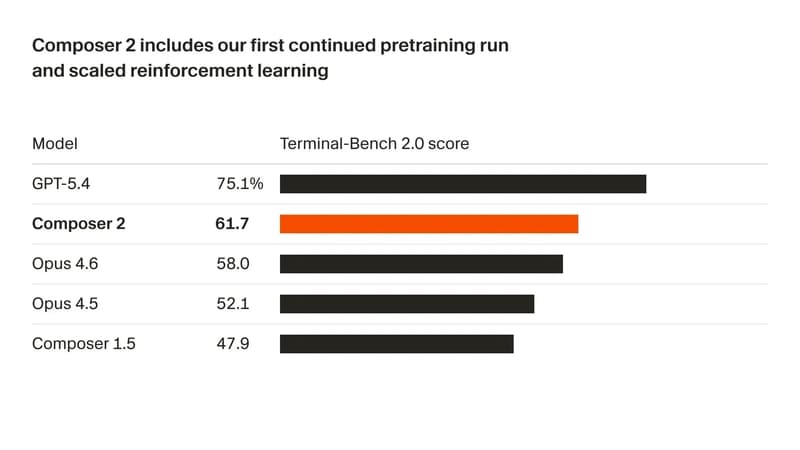
Composer 2: What is new and Compares with Claude Opus 4.6 & GPT-5.4
Dev.to
How UCP Breaks Your E-Commerce Tracking Stack: A Platform-by-Platform Analysis
Dev.to
AI Text Analyzer vs Asking Friends: Which Gives Better Perspective?
Dev.to
[D] Cathie wood claims ai productivity wave is starting, data shows 43% of ceos save 8+ hours weekly
Reddit r/MachineLearning

Microsoft hires top AI researchers from Allen Institute for AI for Suleyman's Superintelligence team
THE DECODER


