
AutoOR: Scalably Post-training LLMs to Autoformalize Operations Research Problems
arXiv cs.LG / 4/21/2026
📰 NewsIdeas & Deep AnalysisModels & Research
Key Points
- AutoOR is presented as a scalable pipeline that post-trains LLMs using synthetic, verified data to automatically convert natural-language operations research (OR) problems into solver-ready formulations.
- The method combines synthetic data generation from standard optimization forms with reinforcement learning where solver execution feedback serves as the reward signal.
- Experiments show that an 8B model trained with AutoOR achieves state-of-the-art or competitive performance on six established OR benchmarks, performing comparably to much larger frontier models.
- For difficult non-linear OR problems involving physical dynamics (where prior frontier models reportedly score near 0%), AutoOR introduces a curriculum RL strategy to bootstrap from limited initial data and make the class learnable.
- The authors argue that AutoOR-style approaches could meaningfully speed up industrial decision-making by reducing the OR expertise required to formalize optimization tasks.
Related Articles

Rethinking Coding Education for the AI Era
Dev.to

We Shipped an MVP With Vibe-Coding. Here's What Nobody Tells You About the Aftermath
Dev.to
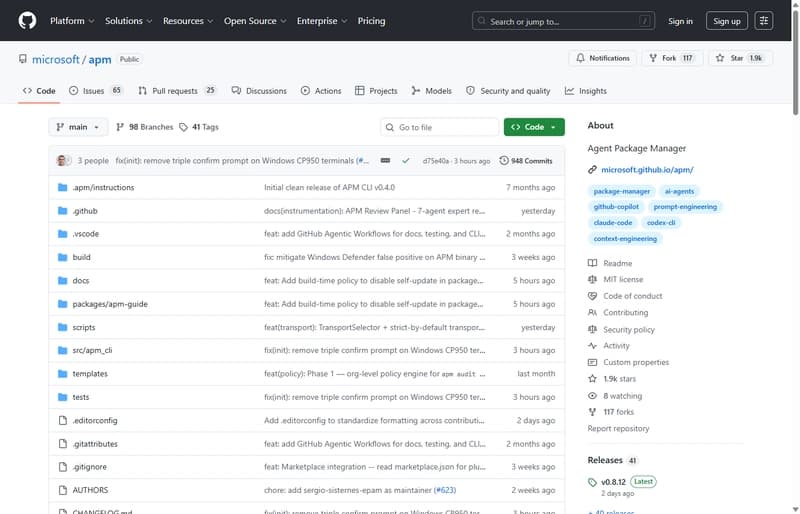
Agent Package Manager (APM): A DevOps Guide to Reproducible AI Agents
Dev.to
3 Things I Learned Benchmarking Claude, GPT-4o, and Gemini on Real Dev Work
Dev.to
Open Source Contributors Needed for Skillware & Rooms (AI/ML/Python)
Dev.to


